

My Boobs Had Their Close-Up (And So Should Yours)
Sorry, this is not about pictures of beautiful young bodies, this is about mammograms.
I went for my regular screening mammogram yesterday at BGSA, I’ve been doing it since 2007. I was able to document my experience with their consent. Many thanks to the technician who took a photo at my request, you did a great job! I want to be upfront: what I'm sharing is my experience, and yours might look a little different. Breasts come in all shapes, sizes, and sensitivities, and that's perfectly normal. Here's what I want you to know about mine so you can put my story into perspective.
My breasts currently have no health issues.
Mine are a C cup so I cannot speak to how other breast sizes are affected.
Apparently mammograms can be more uncomfortable during your period. I am post-menopausal, I don’t recall if I ever had a mammogram during my period.
Mine are not overly dense which can affect discomfort. Apparently mine are rated at a B for density, about 40% of women are classified as the same.
I also have no implants or enhancement. It is very important to let the clinic know if you have any implants so they can accommodate for them.
How Painful Is it?
I know many women are apprehensive about getting it done. The most common thing I hear is they fear the pain. I’m here to tell you this just is not necessarily so.
We have all experienced breast pain at some point in time - for me it’s when my cat steps on just the wrong spot. On a scale of one to ten, I would judge a wayward cat paw to be a 7. A mammogram is maybe a 2. The only time I experienced any pain was when my breasts were not positioned correctly in the scanner, that was about a 4.
Fair warning - you will see my boobs further down in the article. I covered up the nipples to appease the pearl clutchers. Yes, they are saggy. They are 62 years old and they fed 4 hungry babies.
the preparation
There is nothing to drink, you don't need to fast. You do need to arrive without deodorant, powders or sprays. (I bring my deodorant with me so I can apply it when I’m done.)
You arrive at a desk and give your information, then you walk down the hallway . There are NO men allowed past a certain point. All of the technicians are female.
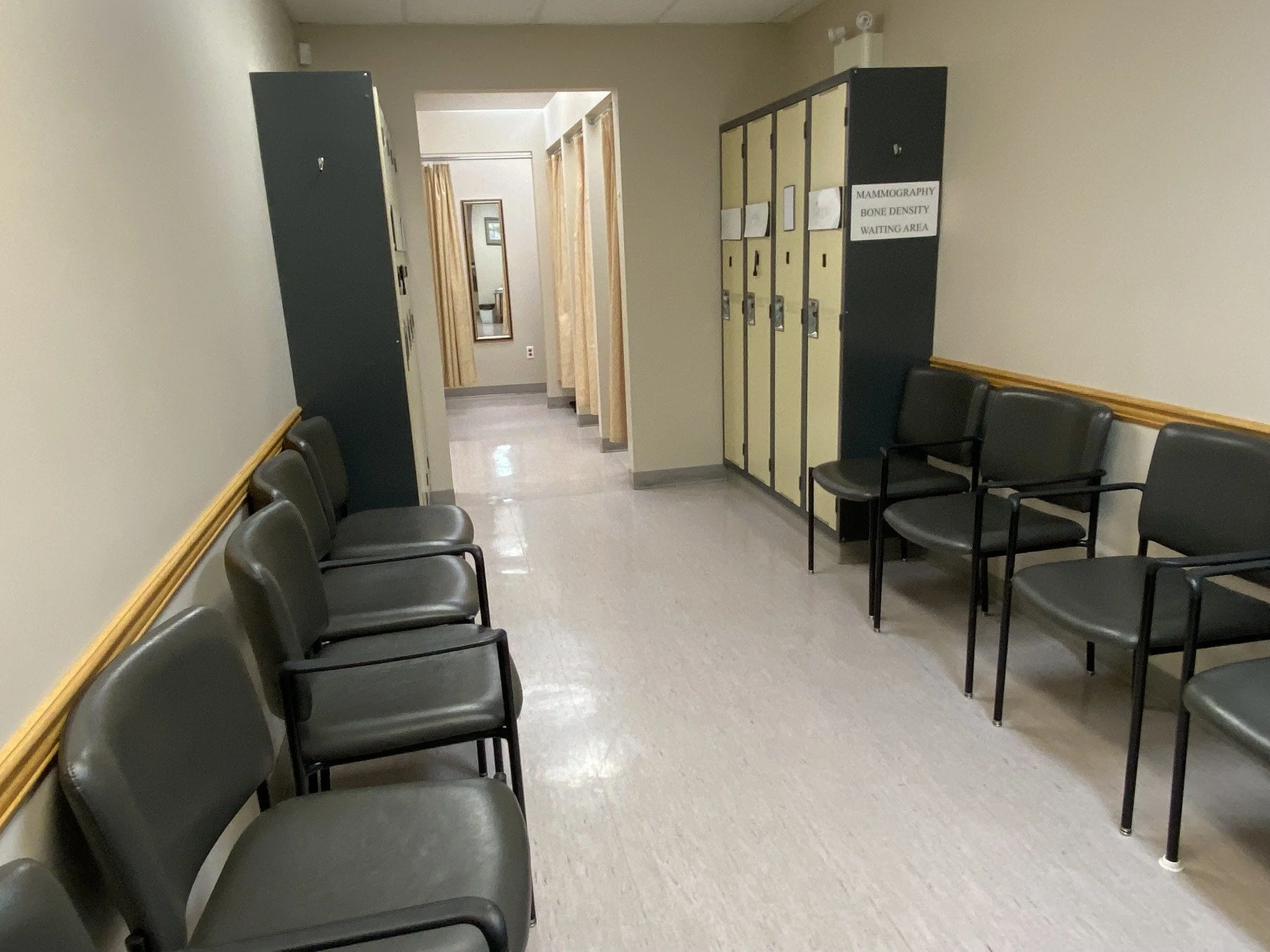
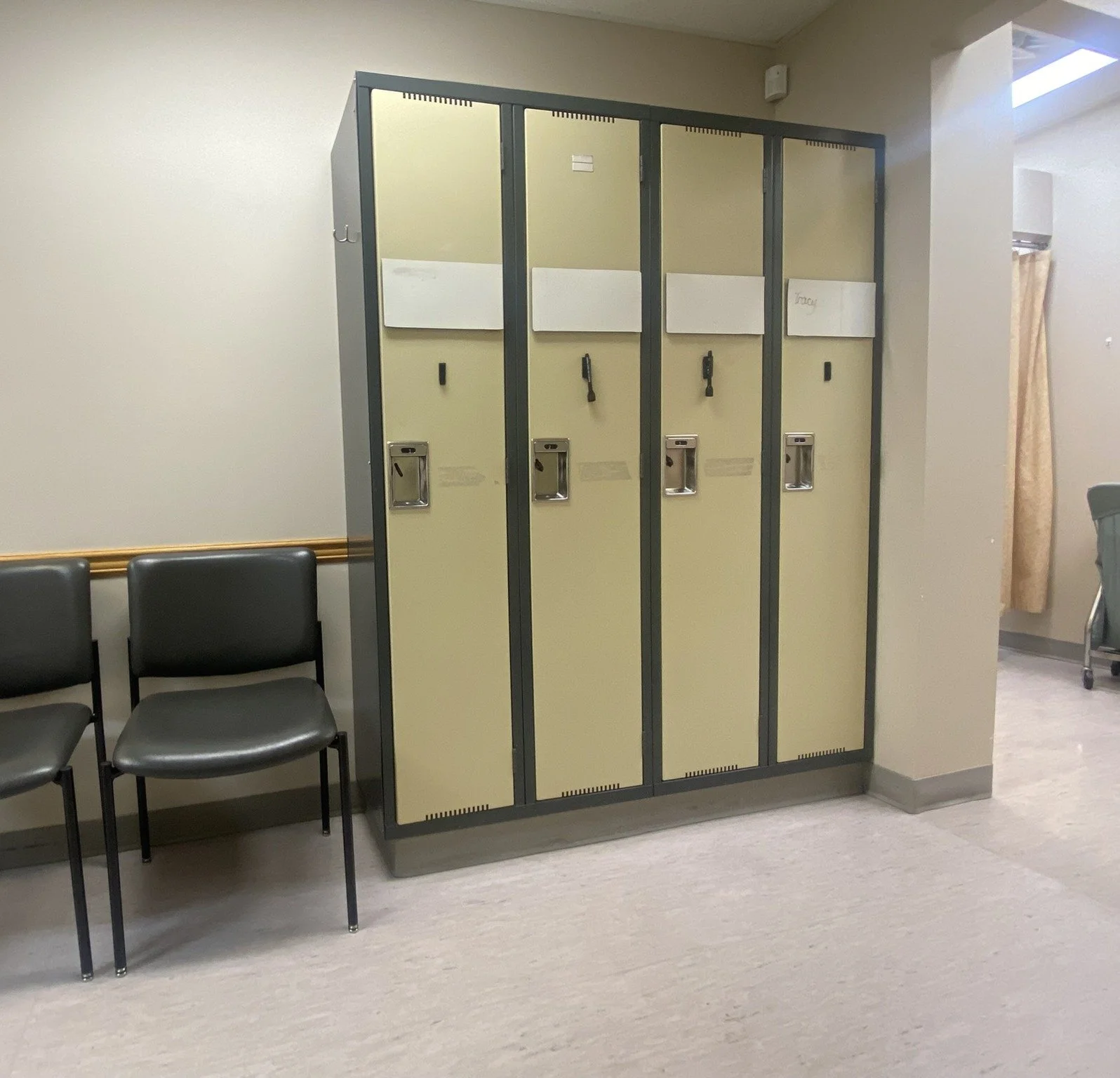
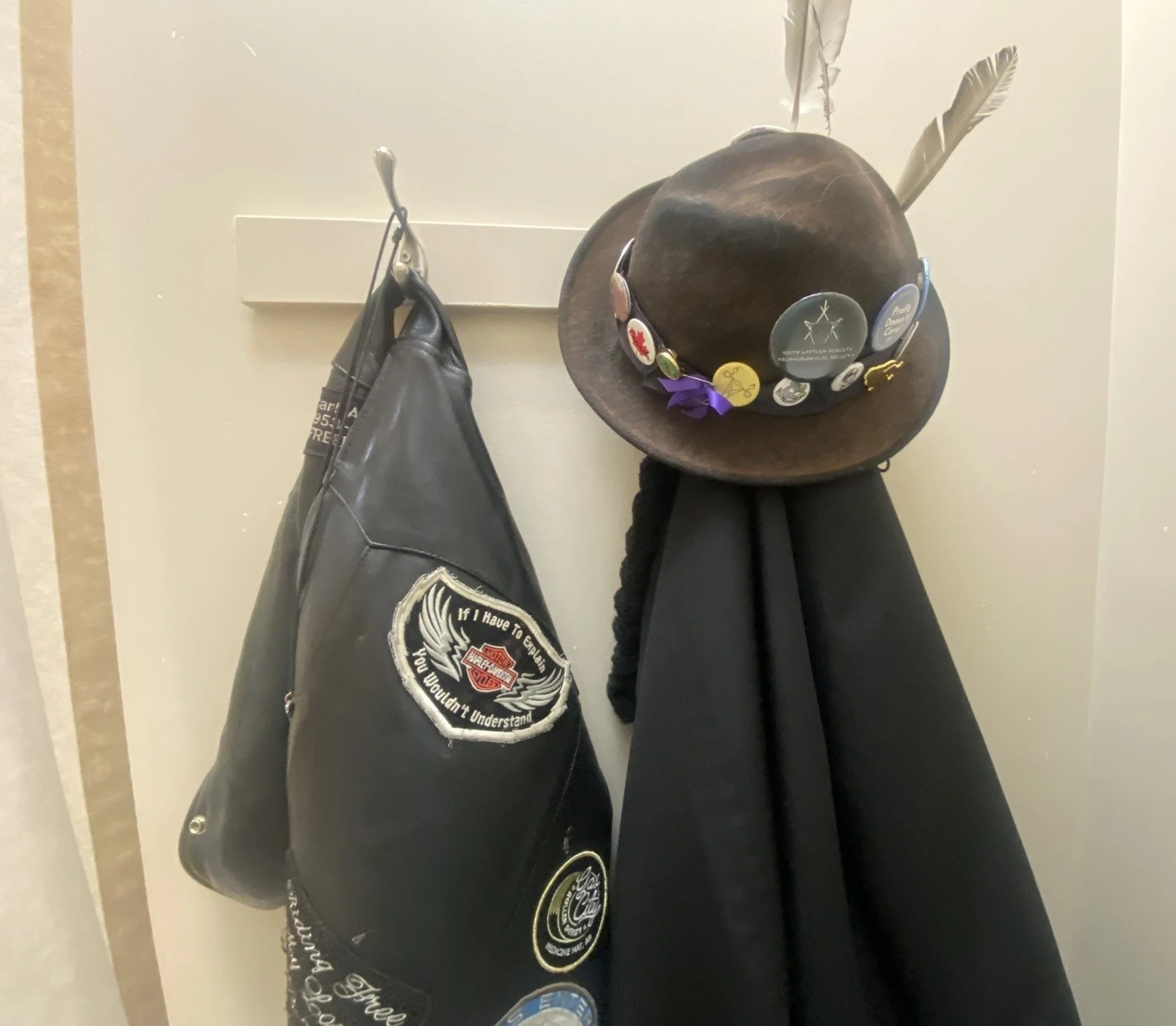
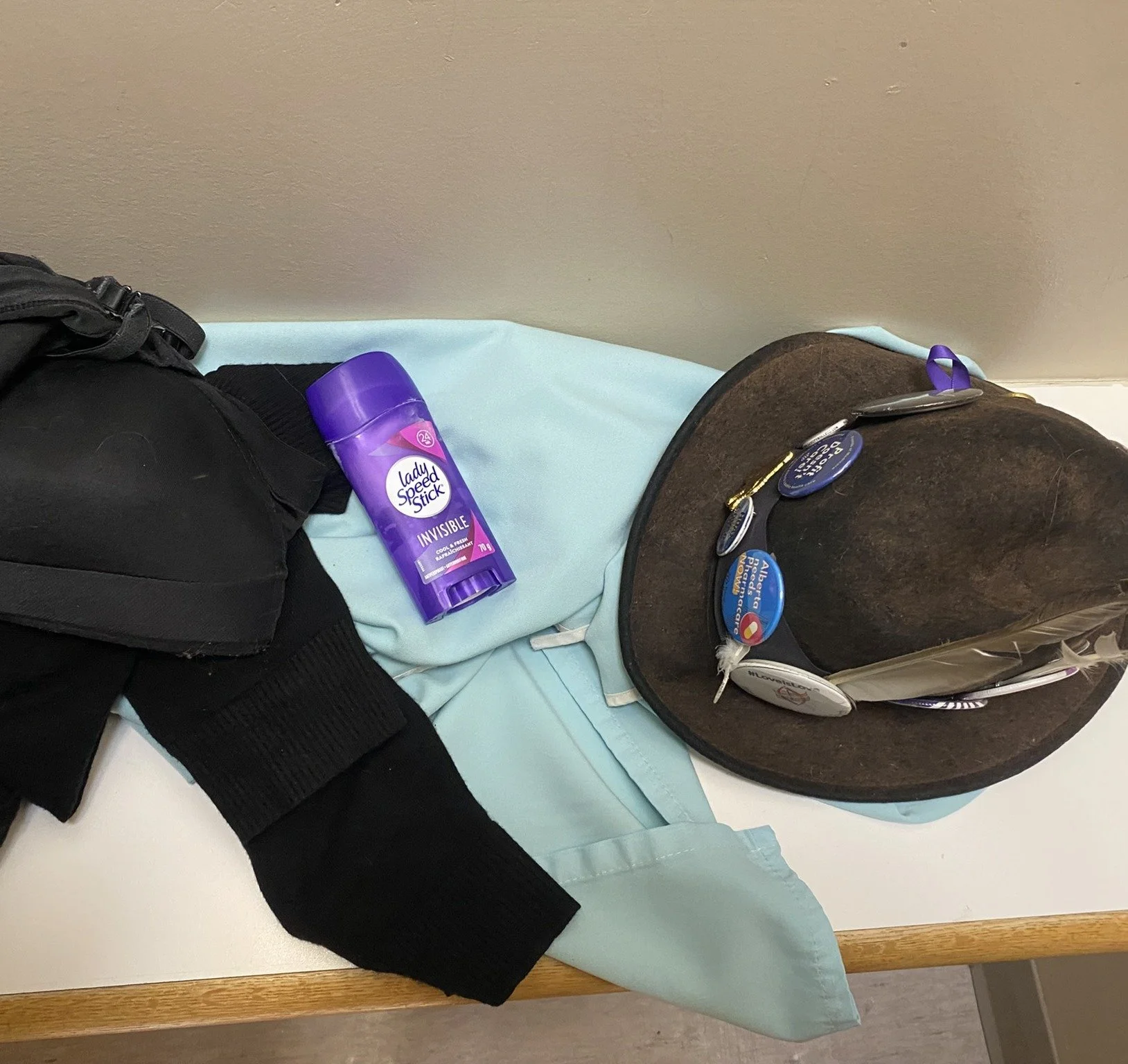
You remove everything on top and put on a gown. I remove any jewelry that might get in the way. There are lockers to put your clothes or you can leave them in the cubicle where you changed and sit in the waiting area.
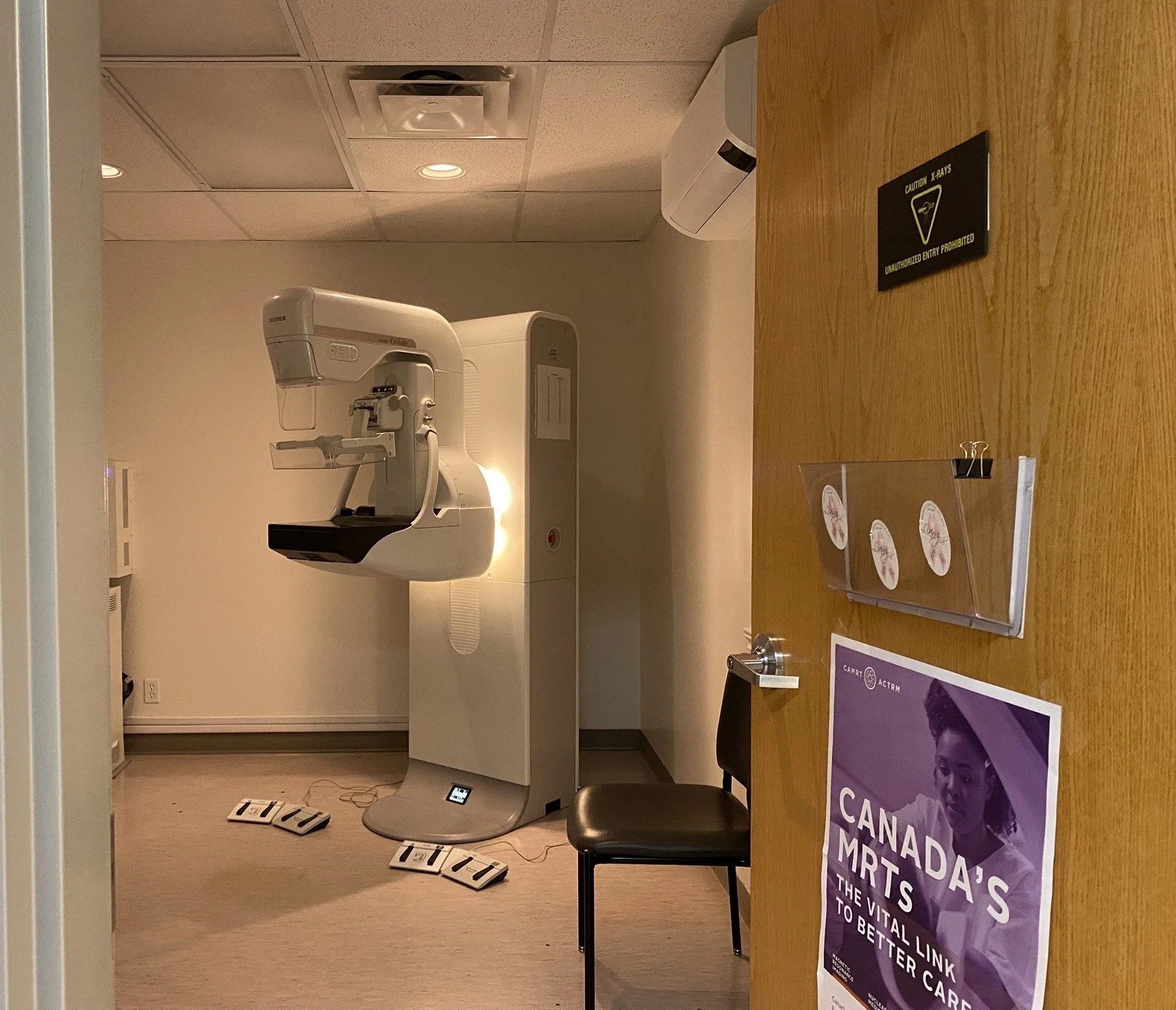
The mammography machine, at BGSA Radiology Medicine Hat
The area is NOT secure so make sure you take your valuables with you into the exam room.
When you get called in
The technician explains the procedure and asks you some questions. For first timers, the questions will be a little different. Eg - They asked me if there had been any changes since my last scan.
Then you take off your gown and step forward to the machine. The technician will position you exactly where you need to be. They know how to do it so that any discomfort is minimized while getting the images they need. Yes, they will be touching your breasts, their hands are gloved when they do this. They will also adjust the position of your shoulders as well as the positioning of your feet.
They will do one breast and then the other. If there are any traces of deodorant or powder or spray, they will give you something to wipe it off and then do the pics again.
As with any diagnostic procedure, don’t bother asking the technicians what they see.
They are not allowed to tell you; they can get into a lot of trouble.
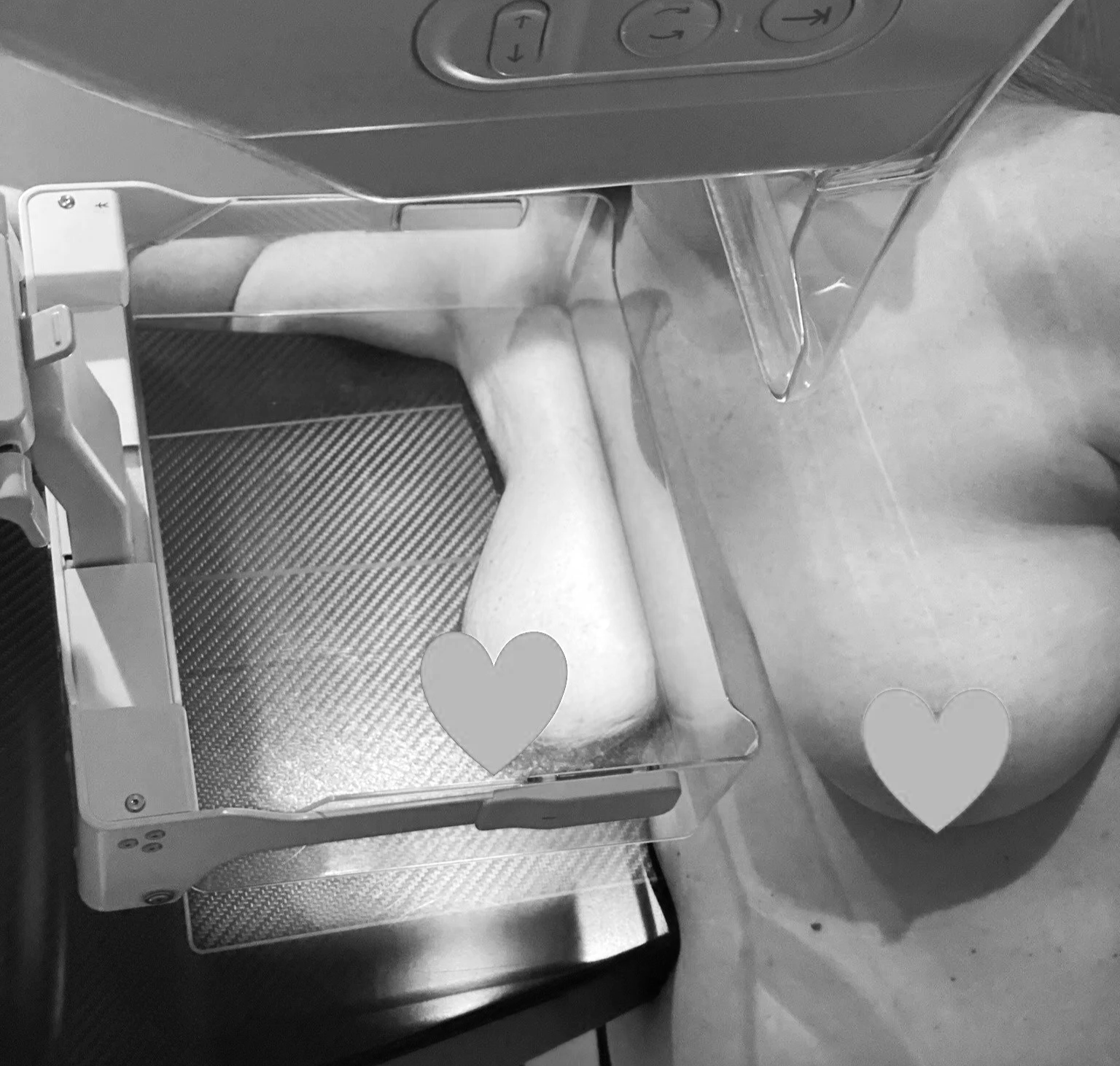
WARNING - A picture of bare breasts is coming up.
They are unenhanced breasts that fed a total of 4 children decades ago.
First they take flat views of your breasts, making sure the plastic plates get as close to the chest wall as they can. The plate comes down and the technician turns a knob to make it tighter. You are told to not breathe and the picture is taken.
As soon as the picture is taken, the plates automatically separate and your breast is released.
One breast, one pic.
Then they take it from a different angle to maximize the amount of breast tissue they can see, reaching to the armpit area. It can be a little uncomfortable with the plate being shoved in your armpit but again when you are positioned right, the discomfort is minimal. Once again, you are told to hold your breath. Once again, the plate lifts as soon as the pic is taken.
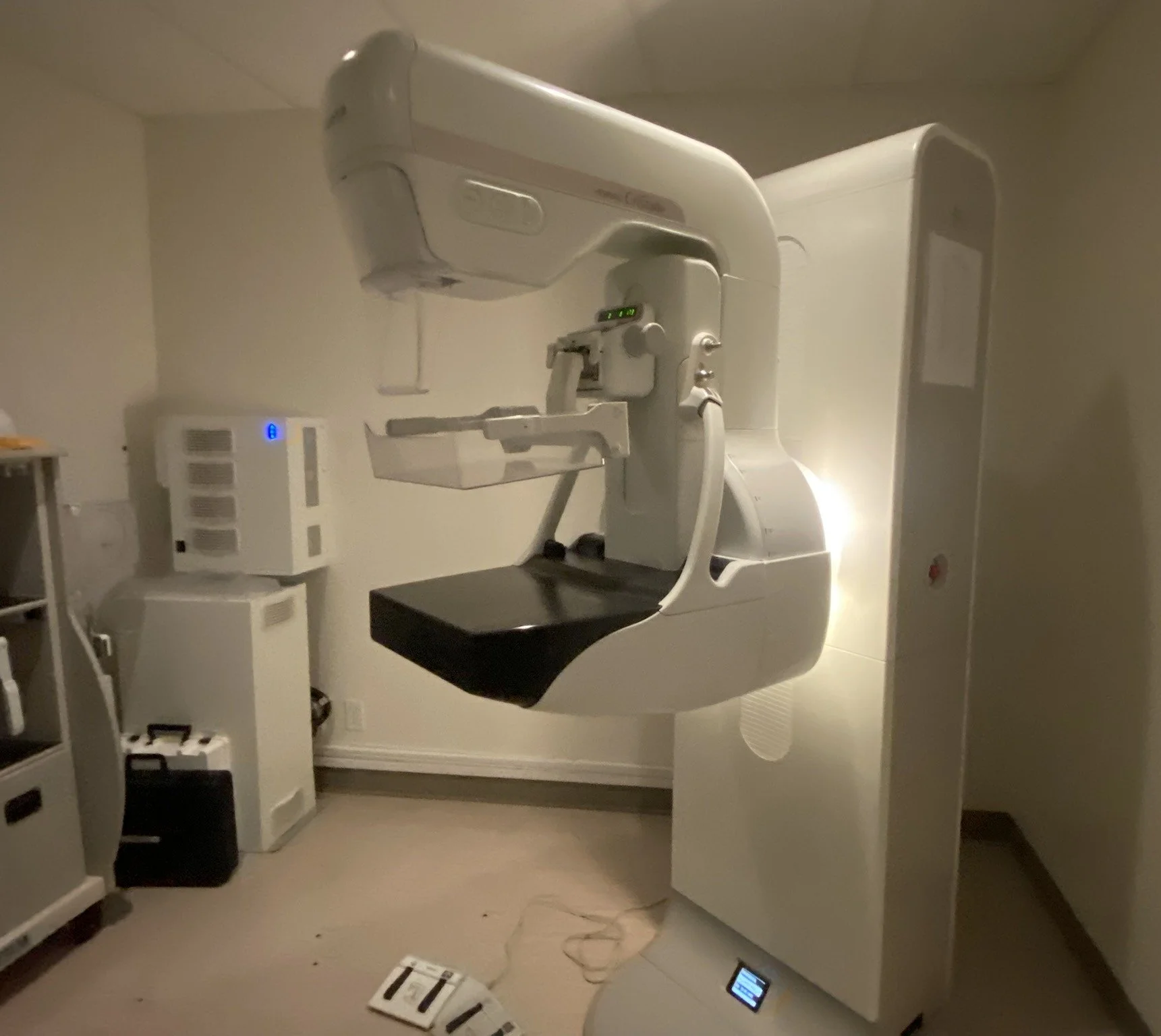
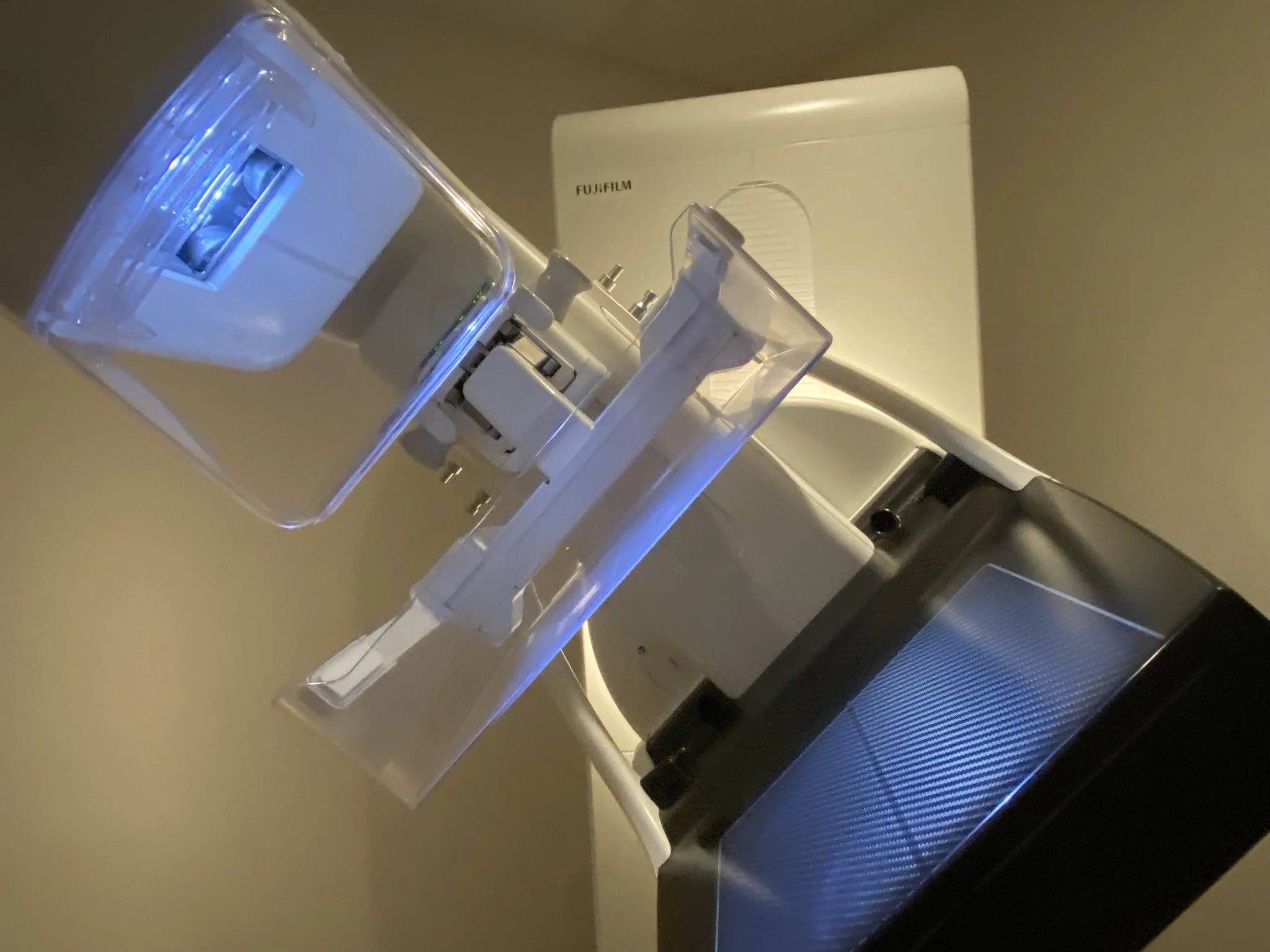
Once upon a time, you had to wait to see if the pics were okay just in case they needed to do them again. Technology has advanced so they can see the picture quality right away which means you can leave right away. My appointment was for 11:40am, I was out of there before noon.
What happens next?
A radiologist will look at the mammogram and write a report on what they see. If there is an issue, the woman may get called back for more pics.
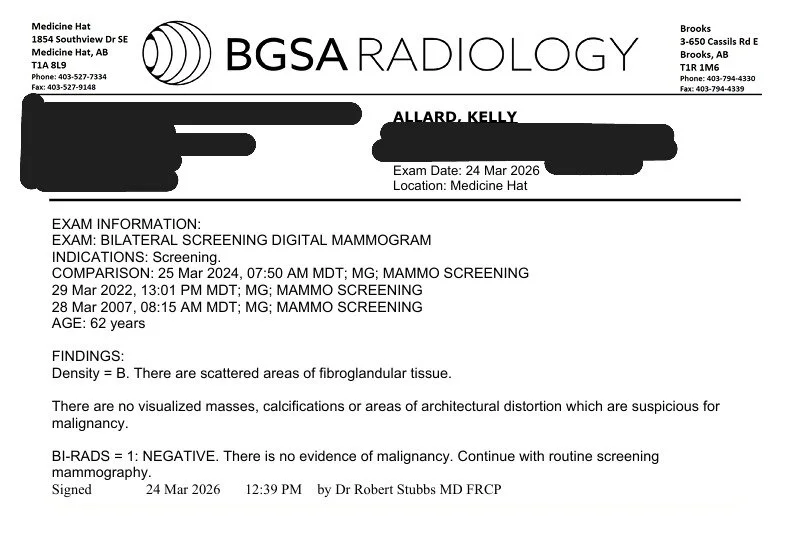
I got my report already, using the MyHealth Alberta Account. My doctor will discuss it with me at some point but there really is nothing to talk about.
A special thank you to BGSA Radiology
For graciously allowing me to document my mammogram experience. I'm especially grateful to the technician who was such a good sport about having her work photographed - she handled it with professionalism, patience, and a great sense of humor. (I won't share her name, as I'd rather not invite unwanted attention from anyone with misplaced opinions about what we were actually doing.)
If you're in Medicine Hat and need diagnostic imaging, BGSA is a great choice. They've been serving our community for a long time. The staff is skilled, the environment is professional, and they genuinely put patients at ease. Whether it's your first mammogram or your tenth, you're in good hands.
Disclaimer:
BGSA Radiology did not pay us for this article, nor did they ask us to say anything nice.
That said, if they ever feel like sending a little advertising love our way, we certainly wouldn't say no. 😉
Additional Info, , Myths Busted, Resources
Why Screening Matters
Breast cancer is the most commonly diagnosed cancer among Canadian women, 1 in 8 women can expect to develop the disease during their lifetime . The prognosis for breast cancer in Canada is often good - especially when caught early. Early detection through mammography can find tumors years before they can be felt, significantly reducing mortality and often allowing for less aggressive treatment options . Across the country, screening guidelines are evolving to reflect this reality. There has been a recent push to lower the starting age for routine screening, with provinces like Ontario and Manitoba now allowing women aged 40 to 49 to self-refer for mammograms, a shift driven by patient advocacy and the understanding that earlier detection saves lives.
In Alberta, the Alberta Breast Cancer Screening Program (AHS) recommends that women aged 45 to 74 at average risk receive a mammogram every two years. In recent years, the province has also worked to make screening more accessible through a combination of fixed sites and mobile screening coaches that travel to rural and remote communities, including those in southeastern Alberta. It is important to note that while these guidelines exist, women of any age with a family history or other risk factors should speak with their primary care provider, as they may be eligible to start screening earlier or require additional imaging like ultrasound or MRI .
What About Women Under 40?
While routine mammogram screening in Canada typically begins between ages 45 and 50, the reality is that breast cancer does not discriminate by age. Research shows that breast cancer rates among younger Canadian women are rising - with cases in women in their twenties increasing by 45.5% over the past 35 years, and increases of 12.5% and 9.1% among women in their thirties and forties respectively . While breast cancer in women under 40 remains relatively uncommon (about 5% of all diagnoses), it often presents differently than in older women - tending to be more aggressive and diagnosed at later stages because younger women aren't routinely screened.
Stories like Lauren McDermott's, who was diagnosed at just 22 years old after finding a lump while on vacation, and Beth Marchant's, who was diagnosed at 32 while breastfeeding her seven-month-old, serve as powerful reminders that breast cancer can affect women of any age . Both women emphasize the importance of self-advocacy: if something doesn't feel right, speak up, push for answers, and don't let anyone tell you you're "too young" for breast cancer.
For women under 40 who have a family history, known genetic mutations (like BRCA), or other risk factors, speaking with a healthcare provider about earlier screening is important . And for anyone - regardless of age - who notices a lump, changes in their breast tissue, or anything that feels off, don't wait. Trust your instincts and get it checked out.
Mammogram Myths - Busted
Myth #1: I don't need a mammogram until I'm 50.
Fact: In Alberta, women aged 45 to 74 are eligible for regular screening every two years. If you're between 45 and 49, you can book an appointment without a referral from your doctor. Some experts and organizations, like the Canadian Cancer Society, recommend making screening available starting at age 40 .
Myth #2: Mammograms are dangerously painful.
Fact: The breast compression can be uncomfortable, but it only lasts a few seconds and is necessary to get a clear image with the lowest possible radiation dose. Many clinics now use newer technology with curved "comfort paddles" to help reduce discomfort.
Myth #3: If I have no family history, I don't need a mammogram.
Fact: This is a common myth. The majority of women diagnosed with breast cancer have no family history of the disease . The two biggest risk factors are simply being female and getting older.
Myth #4: Mammograms aren't accurate for women with dense breasts.
Fact: While dense breast tissue can make it harder to see small tumours on a mammogram, the screening can still detect many cancers. If you have dense breasts, your radiologist may recommend additional tests like an ultrasound for a more complete picture .
Myth #5: The radiation from a mammogram is dangerous.
Fact: The radiation dose from a screening mammogram is extremely low. The proven benefit of finding cancer early far outweighs any small risk from the radiation.
Myth #6: A clinical breast exam by my doctor is enough.
Fact: While breast exams are important, mammograms can detect cancers years before they can be felt as a lump.
Myth #7: Mammograms are no longer needed after a certain age.
Fact: In Alberta, screening is routinely available for women up to age 74. If you are 75 or older and in good health, you can still choose to be screened with a referral from your healthcare provider.
Book Your Mammogram in Medicine Hat
BGSA Radiology – Medicine Hat
Website: http://bsaradiology.ca
Phone: 403-527-7334
Address: 1854 Southview Drive SE, Medicine Hat, AB, T1A 8L9
Hours: Monday to Friday, 7:00 AM – 5:00 PM
Alberta Breast Cancer Screening Program (Screen Test)
Website: https://screeningforlife.ca/
Toll-free appointments: 1-800-667-0604
What it is: Alberta Health Services' provincial screening program. You can book a screening mammogram without a referral if you're between 45 and 74. They also operate mobile screening clinics that travel to over 120 rural communities, including southeastern Alberta .
View Your Results Online
MyHealth Records: https://myhealth.alberta.ca
What it is: Albertans can view their diagnostic imaging reports online through MyHealth Records, usually within days of the exam. You'll need a verified Alberta.ca Account to log in .
Information on Breast Health & Screening
Alberta Health Services – Breast Cancer Screening: Information on eligibility, what to expect, and the importance of regular screening. Alberta Breast Cancer Screening Program | Alberta Health Services
Canadian Cancer Society: Trusted, reader-friendly information on breast cancer, risk factors, and screening recommendations. Screening for breast cancer | Canadian Cancer Society
