Series: The Alberta Referendum - What They're Not Telling You Pt 1
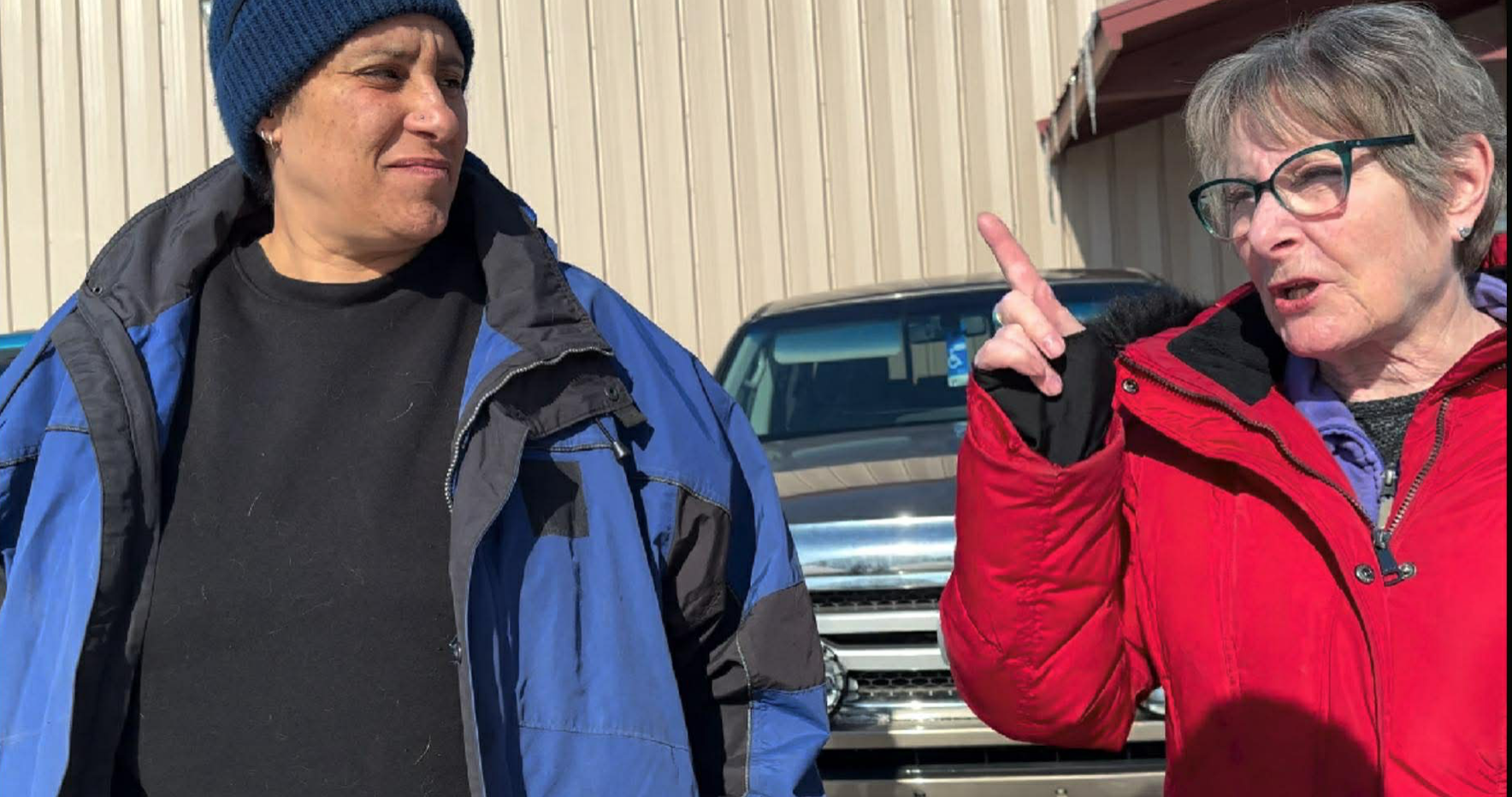
Tara and Karen after Feb 21 Danielle Smith /Justin Wright Town Hall in Medicine Hat AB. One voted UCP, one did not; both very disappointed at the lack of answers given at the town hall. (Screenshot from video - Thomas Fougere)
The Big Question: Why Are We Voting on This Now?
Let's start with a simple question.
On October 19, the Alberta government wants you to vote in a referendum. You'll be asked nine questions about things like immigration, health care, and even changing the Canadian Constitution.
But here's a question to ask before we get into all that:
Why now?
The Budget They Don't Want You to Think About
A few days before announcing this referendum, Premier Danielle Smith's government was getting ready to show us the new provincial budget. You know, the one that's supposed to say where our tax money goes.
That budget is going to have some bad news. We're talking about a multibillion-dollar deficit. That's a fancy way of saying the government is spending way more money than it's bringing in.
Here's the part that should make you scratch your head: we're selling record amounts of oil. Oil prices aren't what they used to be, but the stuff is still flowing. So if we're selling all this oil and still coming up short, maybe the problem isn't what they're telling us it is.
The NDP's Rakhi Pancholi said it pretty plainly: oil revenues over the past five years have been the highest in decades. The real problem is that Alberta's finances are built on oil money, and when prices drop even a little, the whole thing wobbles.
But instead of talking about that, the government announced a referendum that will be in the news for the next eight months.
Convenient, isn't it?
What They're Asking
The first two questions on that ballot are about immigration.
Question 1 asks if you want the province to take more control over immigration. It talks about lowering immigration and giving "Albertans first priority" on jobs.
Question 2 asks if you want to limit things like health care and education to only citizens, permanent residents, and people with something called "Alberta-approved immigration status."
Sounds reasonable, right? Who doesn't want Albertans to get first crack at jobs?
But here's what they're not telling you.
The Workers You Never See
There are about 281,000 people living in Alberta right now who are not permanent residents. They're here on work permits. They're here on student visas. They're here seeking safety.
They're not citizens. Under these new rules, they might not get health care. They might have to pay fees for their kids to go to school.
So who are these people?
Some of them work at the JBS plant in Brooks. That plant employs thousands of people from 120 different countries. It produces 35 per cent of Canada's beef. The work is hard, it's smelly, it's dangerous. Most Canadians don't want it.
(A documentary called “Brooks - The City of 100 Hellos” was produced in 2011 - it’s a fair bet that 15 years has only increased the immigrant population. It used to be a rite of passage for Medicine Hat and area residents to work at what was once called Lakeside Packers, buses picked up workers daily in Medicine Hat.)
Some of them work in Banff and Lake Louise. They staff the hotels, cook the food, clean the rooms. The businesses there fought the government just a few months ago when they tried to cut health coverage for these workers. They know what happens if the workers leave: nobody checks you into your hotel, nobody serves your dinner, nobody cleans your room.
And some of them work in our hospitals.
Think about the last time you were in a hospital. You remember the doctor. Maybe the nurse. But who cleaned the room? Who changed the sheets? Who mopped up the blood and vomit and who knows what else?
In many Alberta hospitals, that work is done by immigrants. They work nights, weekends, holidays. They get yelled at by patients who are confused or in pain. Sometimes they get hit, kicked, or spit on. They do work most of us wouldn't do, for wages most of us wouldn't accept.
They are absolutely essential. And they are invisible - until they're gone.
"But Canadians Will Step Up" - Will They?
Some folks say: Git 'er Done - let Canadians fill those jobs.
Fair enough. Let's look at why that doesn't happen.
First, the rules are different for farm workers.
In Alberta, if you work on a farm or ranch, you don't get overtime pay. You don't get paid for holidays. The rules around hours of work and breaks simply don't apply to you.
That makes sense for a grain farm where you have to bring in the harvest before the rain hits. You make hay while the sun shines. It's unpredictable.
But here's the thing about greenhouses.
A greenhouse is not at the mercy of the weather. They have artificial lights. They have heat. They can grow all year round. There's no single harvest period - it's constant.
Yet under Alberta rules, greenhouses are considered farms. That means a worker in a greenhouse can be scheduled for 12-hour shifts, 6 days a week, week after week, with no overtime pay. No holiday pay. No extra for working on a Sunday. Many greenhouses offer 35-40 hr work weeks, which is reasonable - when they need more work done they hire more workers.
Some do not.
The Owl knows of a local greenhouse that has many of their workers work 12 hr days, 6 days a week. This is not for a single harvest, this is for ongoing operations. Imagine, working 72 hours a week for straight time.
Now ask yourself: how many Canadians are lining up for that?
The Alberta Federation of Labour has warned that these rules create a two-tier system where some of the most vulnerable workers - often temporary foreign workers - are exploited while employers save money on overtime and holiday pay.
So when someone says "Canadians will do those jobs," the honest answer is: not under these rules, they won't.
If the temporary foreign workers leave - if they decide Alberta isn't welcoming -Who's going to work those 12-hour shifts in the greenhouse for no overtime?
Who's going to clean the hospital rooms at 2 a.m.?
Who's going to work in the Brooks plant?
They're Already Leaving
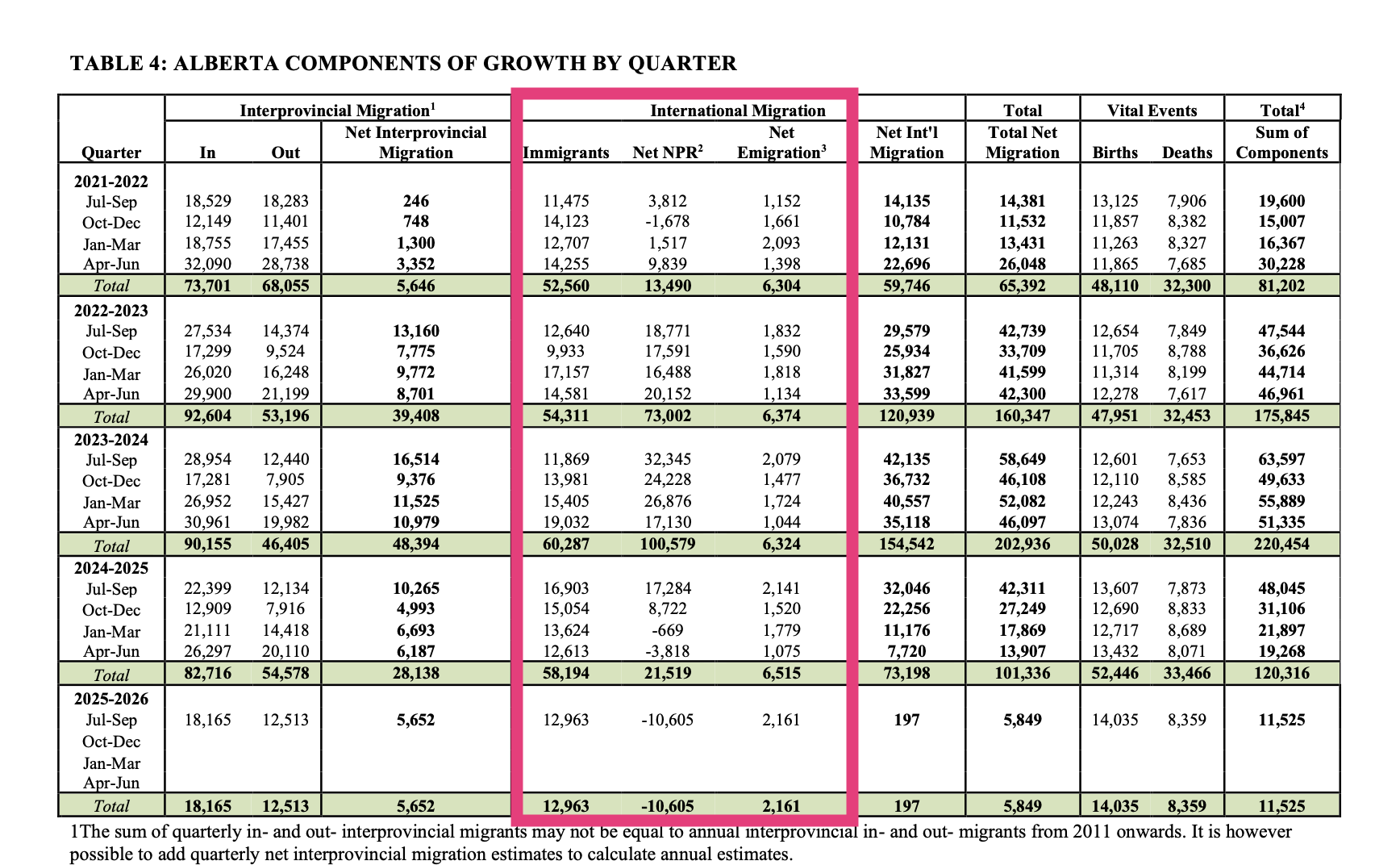
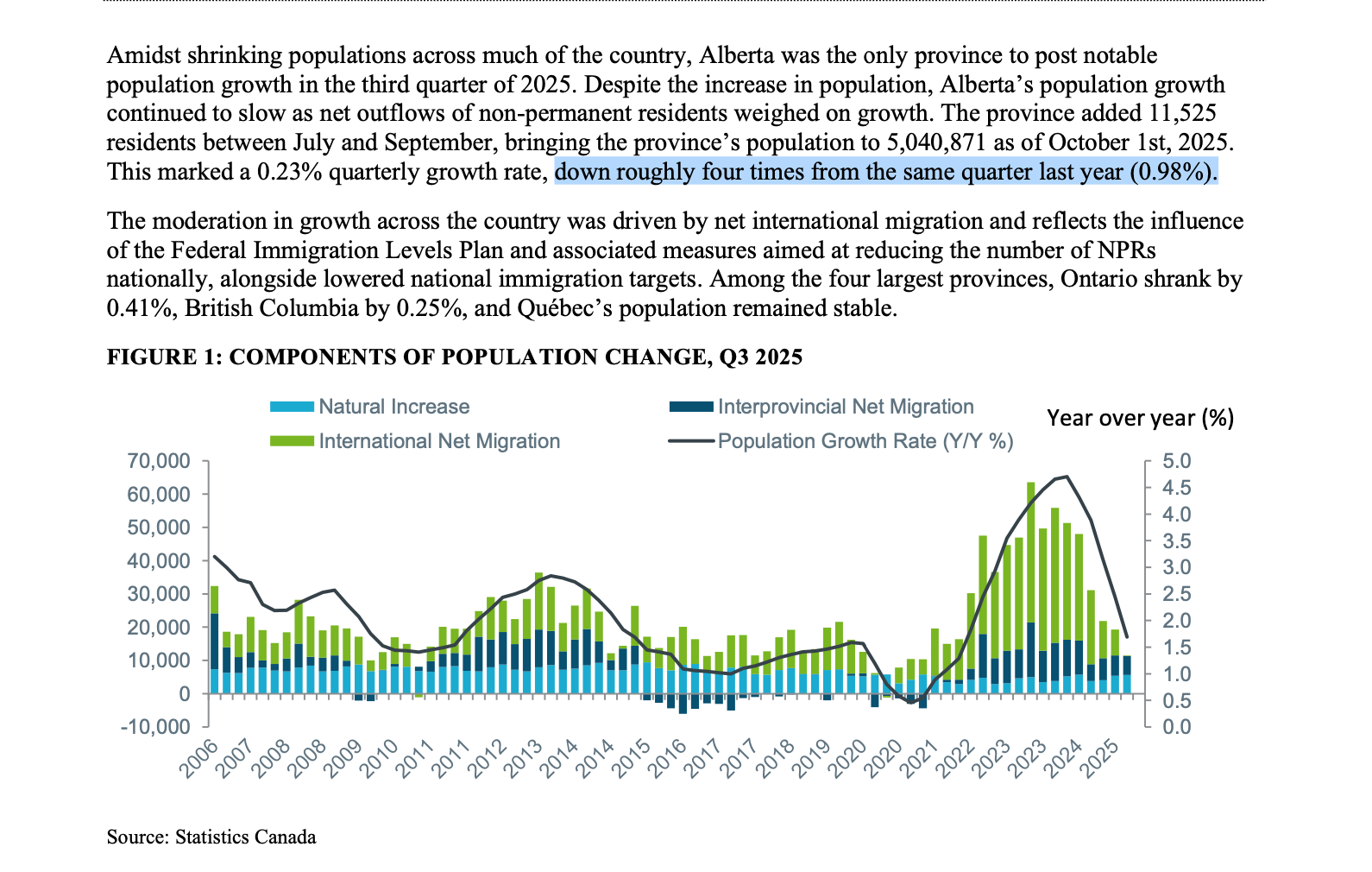
In just three months last year - July to September 2025 - Alberta lost about 10,600 temporary residents. More left than arrived.
Why?
Because the federal government changed the rules. They put caps on student permits. They made it harder to get work permits. They stopped processing some applications altogether.
The workers who clean our hospitals and run our meat plants are already being squeezed out by federal rules. If the province adds more rules on top of that - if we make it clear they're not welcome - they'll leave even faster.
These workers have options. Other provinces need workers too. Ontario, BC, Manitoba - they'd all love to have trained, experienced people who already know the job.
Images below - source Gov’t of Alberta Quarterly Population Report Third Quarter 2025
What Happens When They Leave
If hospital workers leave, who cleans the operating room?
Who mops up the blood and the vomit?
Who changes the bedpans?
You can have all the doctors and nurses in the world. None of it matters if the room isn't clean. Surgeries get delayed. Infections spread. Patients wait longer.
If plant workers leave, the line slows down. Cattle back up at the farm. Ranchers have to pay for more feed, more water, more vet care. That cost gets passed to you at the grocery store.
(Have you seen the price of beef lately?)
If greenhouse workers leave, who's going to work those 12-hour shifts, 6 days a week, with no overtime?
If hotel workers leave, the rooms don't get cleaned. The restaurants don't open. Tourists stop coming. And all those pretty mountains don't matter if there's nobody to feed you or clean your room.
The Irony
Here's what should make you stop.
The same people who complain about immigrants "taking our jobs" rarely want to do the jobs immigrants actually do. They don't want to clean up vomit in a hospital. They don't want to work in a slaughterhouse. They don't want to work 12-hour shifts in a greenhouse for no overtime. They don't want to mop floors at 2 a.m.
The same politicians who talk about "putting Albertans first" are the ones whose policies would drive away the people who keep things running.
When a surgeon saves a life, we celebrate. But when the cleaner makes sure the room is sterile - we don't even see them.
They're invisible. Until they're gone.
The Bottom Line
When you look at that ballot, ask yourself:
Why now?
Because the budget coming next week has a multibillion-dollar hole. Because oil money isn't covering what it used to. Because it's easier to blame someone else than to explain why our finances are a mess.
Now ask yourself:
Who will actually be hurt by these changes?
It won't be the politicians who wrote the questions. It won't be the people who can afford private health care. It won't be the people who never think about who cleans their hospital room or processes their beef or grows their vegetables.
It will be the people who keep things running. The people we don't see. The people who came here to build a better life and ended up doing work that most of us don't want.
If they leave, we'll all feel it.
And by the time we do, it'll be too late.
Next in Part 2: Who Belongs? A closer look at "Alberta-approved immigration status" and what it could mean for your neighbours.