

The Dangerous Man Next Door: Philanthropy, Power, and Who We Really Protect
Trigger /Content Warning - mentions sexual assault, child sexual abuse, explicit sexual terms
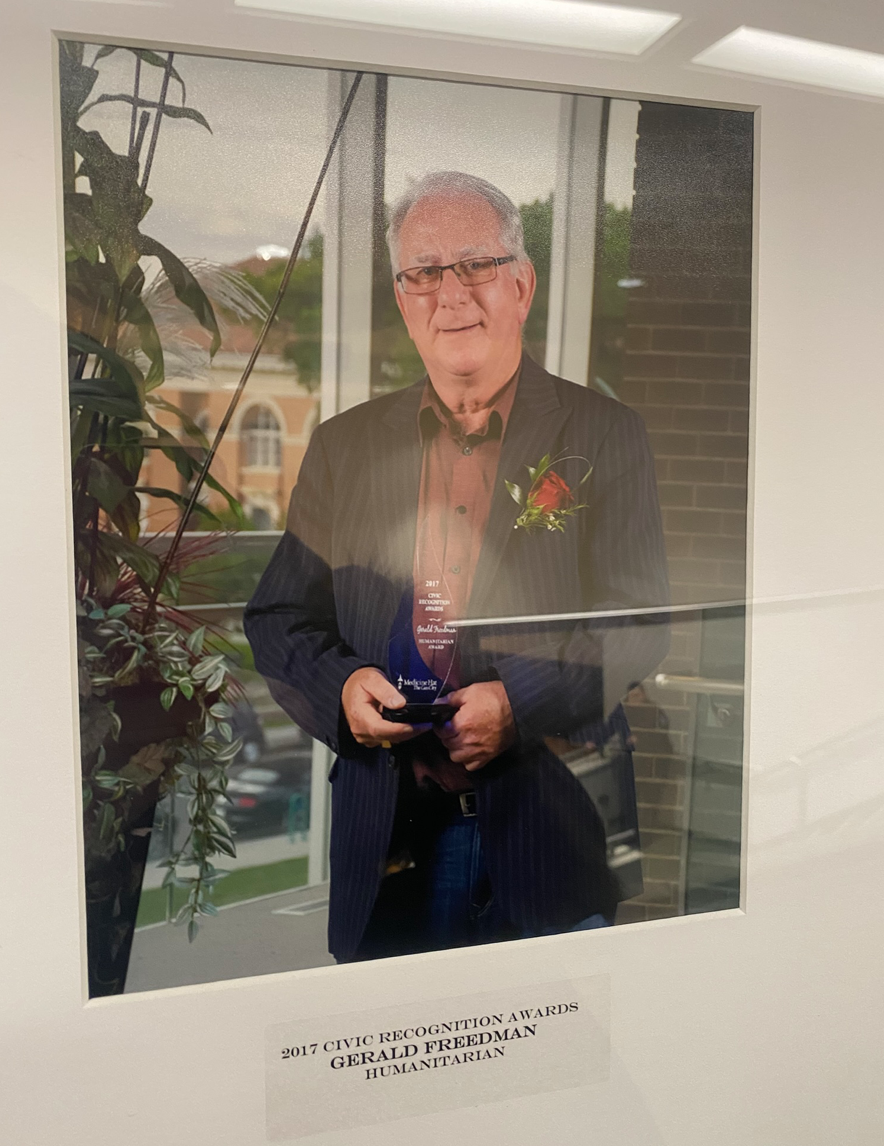
A 77-year-old man is charged with the sexual assault of a teenage waitress. A 76-year-old man is charged with secretly recording a woman and possessing child pornography. Both are, or were, men of standing in Medicine Hat. One, Gerald Freedman, was just sentenced to probation for simple assault after a plea deal reduced a sexual assault charge. The other, Roy Jebson, died after his charges last year sparked a firestorm of public harassment. These two cases, sitting side-by-side in our recent history, scream a truth we rarely confront: the most dangerous man is very often the one closest to you. He is not a shadowy stranger. He is the philanthropist at the golf club, the elder in the family home, the trusted friend. From our courtrooms to our own instincts, we are still failing to truly see him.
The Core of the Crime is power, not passion. Let’s be very clear - to dismiss these acts as the confused impulses of "harmless old men" is to dangerously misunderstand the crime. Sexual assault has nothing to do with sexual desire or attraction. ( During my teenage years, a 90 year old woman not far from me was sexually assaulted.)
It is not about sex. It is not about being attractive. It is, and has always been, about power, control, and entitlement. The act is a weapon to dominate, humiliate, and assert ownership over another person's body and autonomy. This is why an assailant’s age, marital status, or physical capacity is irrelevant. An old man kissing a young woman without her consent is not expressing attraction; he is asserting a privilege he believes his age, gender, or status grants him over her. To excuse it as "just a kiss" is to buy into the very myth that fuels the assault: that his impulse for control is a natural force, rather than a conscious choice to violate another.
Understanding this truth is essential. It strips away the last pathetic excuse and forces us to see the act for what it is: a calculated abuse of power.
For generations, women and children were taught a cruel lie: expect this. My generation grew up with it. Growing up in the 1970s, we girls were told to be careful, that males were unable to control their sexual urges when they got to a certain point of sexual arousal. We were told that “blue balls” were very bad for boys and “cock teases” deserved to get sexually assaulted (it was called the R word back then). We were told that if we said yes to sex, that we did not have the right to change our minds and back out, we could expect the male to take what he needed. Females were expected to stifle their own sexual desire as they were held responsible for reactions of the males around them. This often had a negative effect on women’s sex lives - being so used to restraining their desires left many to have difficulty experiencing arousal or achieving orgasm; faking orgasms was considered to be normal. Of course we were then often mocked for being “frigid”.
Did you know that until 1983, it was legal for a husband to sexually assault his wife in Canada. The justice system itself framed a husband’s entitlement as absolute. The surge in reports of child sexual abuse in the 1980s didn't mean it was happening more; it meant that for the first time, we were starting to listen. Before that, children were told by their abusers that this was "just our secret" or even "normal." The subsequent push to teach "good touch/bad touch" in schools was a revolution, but an incomplete one.
Alberta’s policy, which now makes sex education an opt-in program for parents, highlights the tragic flaw. While framed as a parent’s right, it ignores a devastating reality: in some homes, the parent is the abuser. To rely solely on the family to teach bodily autonomy is to leave countless children defenceless against their primary predator. As a society, we must affirm: nobody is entitled to sexual favours from anybody. Nobody is entitled to abuse others.
(I grew up on the West Coast, my personal stories do not involve anyone from Medicine Hat. Nobody knows the names of my old friends so they are not identifiable.)
One of my best friends had her grandfather living with her family, he sexually abused all of the daughters in the home. I did not know about this until decades later.
That same grandfather called another friend and myself up to the hayloft where he asked us if we wanted to “hump”. We laughed at him and went down the ladder. We said nothing at the time, dirty old men were pretty common.
We were 12.
Everyone thought he was such a “nice old man”.
I worked as a waitress starting as a teen - being a waitress meant sexual harassment was considered part of the job. From guys jokingly asking me if I could stand on the menu so they could order me (seriously guys, do better), to RCMP officers making crude jokes to 15 year old me as I took their breakfast orders to a customer actually grabbing my breast as I leaned over to pour coffee when I was still a minor at the age of 18. I’m not even including the many times someone slapped /grabbed my ass as I walked by, sometimes they tried to grab my pussy as well. I’m not including the times I was called names for rejecting people.
I have 3 daughters, if I told you all the stories, this editorial would be very long. I am just going to report a couple of them. In the early 2000s, one of my daughters was catcalled when she was delivering flyers in the early afternoon. Three drunk males at a house a few doors down from us were calling her to come over, “we’ll show you a good time”.
She was 10. (Yes, she looked 10. Yes, I called police and I believe they had a wee chat with the males. I also called the Shopper and told them. I call them “males” because they do not deserve to be called “men”.)
That same daughter liked to go to the teen dances at the YMCA. One evening her dance partner put his hand on her 12 year old ass - she punched him in the throat.
Gerald Freedman. A retired investment broker. A Civic Recognition Award winner. His photo is up in a prominent spot in Medicine Hat City Council Chambers. A donor to the very women’s shelter that aids victims of the violence his actions represent.
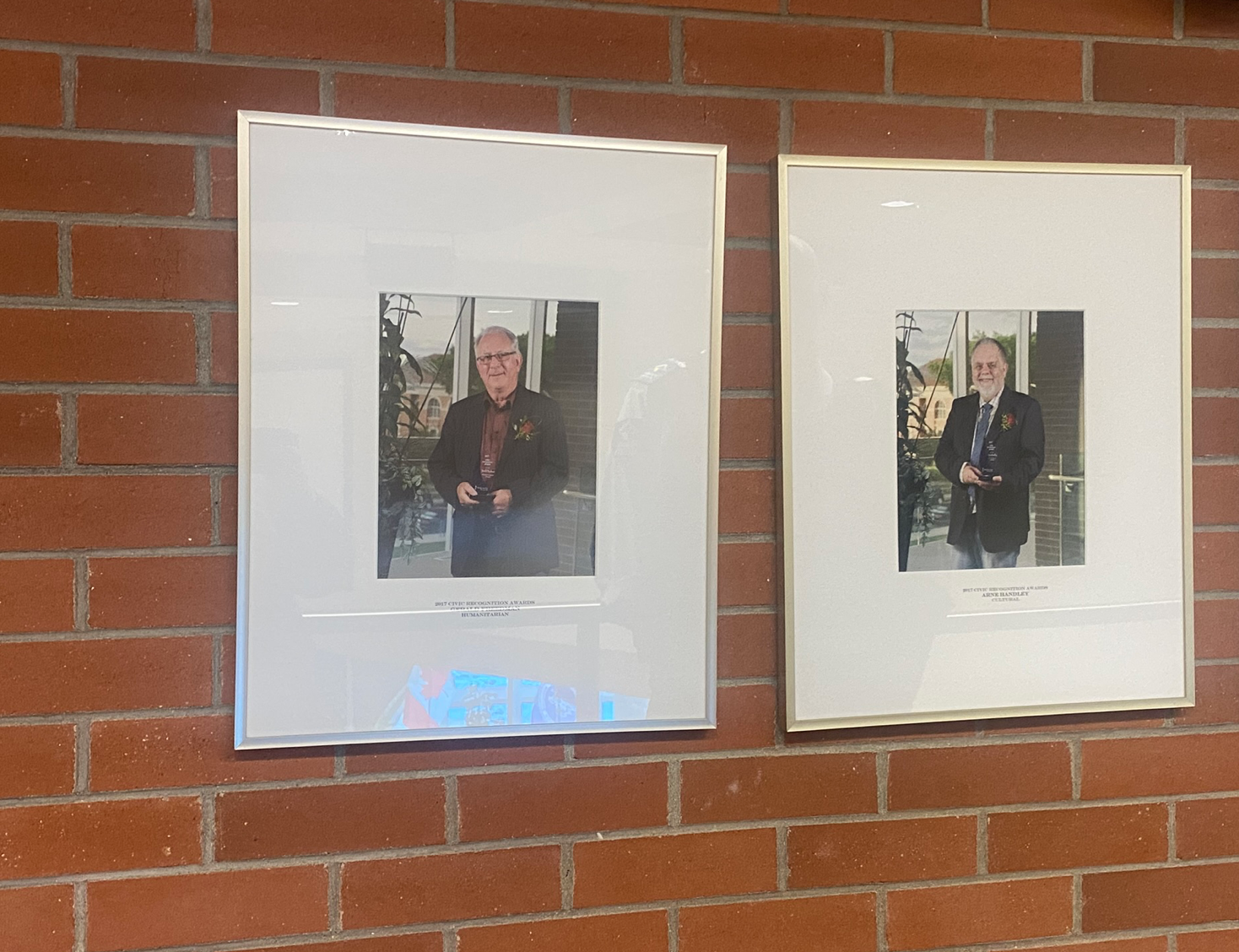
Gerald Freedman’s photo
is on the left in Medicine Hat City Hall Council Chambers
His sentence: 12 months probation, with a discharge if he behaves, sends a clear, old message. It says that a man’s public philanthropy can be leveraged in a plea deal to soften the consequence of a private violation.
It is likely that Freedman’s stature made it harder for the young woman to come forward. And yet, that same stature was used to secure a lighter outcome.
Let us be unequivocal: The victim in this case did not ruin Gerald Freedman’s reputation. His own behaviour did. He made the choice to assault a young woman at a workplace. He is the only one responsible for the consequences. The fact that the golf course banned him speaks louder than the court’s sentence; our community institutions are often ahead of our justice system in drawing ethical lines.
Now we must see if the City will take similar action by removing his photo from Council Chambers.
Our local women’s shelter has done heroic work for decades, teaching about abuse and providing refuge. Yet the need only grows. Some women return, trapped in a cycle. It becomes a generational thing. This is the proof that information alone is not enough. Societal attitude must change. We can teach concepts in schools, but if our courtrooms still weigh a man's donations against his victim’s trauma, we teach a different, more powerful lesson.
The tragedy of Roy Jebson’s case—ending in his death amid public fury—shows the other dangerous extreme. Owl News does not condone vigilantism. A mob delivers no justice, only more trauma. It steals the chance for a fair process and leaves only wreckage.
So where does real change happen? It happens long before a crime is ever committed. It happens in everyday conversations. The work falls where it is most uncomfortable. It falls on men. You must be the ones to tell your friends, your uncles, your golf buddies, that this is not okay. Challenge the "harmless" joke, the “locker room talk”, the entitlement. Imagine if this happened to your daughter, your sister, or your friend. The perpetrator wouldn't be a cartoon villain; he'd be the respected man everyone knows. Let that guide you to speak up. And it must fall on the older generation. We must confront the outdated attitudes we inherited. When an elderly woman hears of this case and asks, "What ever happened to the times where you just punched the guy?" we see the old blueprint: violence was a private matter, justice was personal and silent, and women's bodies were territory to be defended in a fight between men, not a domain where her own "no" was law. That resignation, that this is just the way things are and always will be, is the soil in which abuse grows.
Grandmothers, grandfathers, aunts, and uncles: your disbelief in the system must transform into a belief in the victim. Older people should never, ever get a pass because of the way things were when you grew up, you have had longer to become decent humans. Your hope for a simpler past must become a demand for a more just future. We have stopped asking, "What was she wearing?", but if we are still whispering, "But look at all the good he's done," or, "Why didn't she just handle it herself?" then we are still lost.
The most dangerous man is the one we are reluctant to accuse. It is time for all of us, but especially men in positions of influence, to stop being reluctant. Believe victims. Hold power to account. Teach consent not as a lesson for children, but as the non-negotiable ethic of our entire community. Only then will the need for shelters finally begin to recede.
On behalf of Owl News and, we believe, this entire community, we wish to speak directly to the young woman who stood up to Gerald Freedman. Your courage is not a footnote in this story; it is the story. You looked at a man draped in accolades and influence, you felt the weight of the fear that holds so many back—the fear of not being believed, of being called a troublemaker—and you chose to speak your truth anyway. You told the court, and all of us, that your boundaries matter. In doing so, you did not just stand up for yourself; you stood for every woman who has ever been made to feel small in her workplace or unsafe in her community. Your strength has forced a necessary and public conversation about power, entitlement, and justice in Medicine Hat. For that, we thank you. You have shown us what real strength looks like, and our community is stronger for your voice. All of us at the Owl are proud of you!
Hey folks, Owl News could use some support. If you think what we do is valuable or useful, please consider buying a paid membership, buying some advertising or even a direct donation. We are the only locally owned and operated independent news outlet in Medicine Hat.
We have no corporate overlords, we alone decide what we want to cover.
Please help us shine a light on injustice and tell the stories that need to be told.
To help, just go up to the “Support Us” tab at the top of the page and buy a membership, shop in our store or donate directly. We’ll also take cash if you see one of us in person. We’re not proud, we’ll take a five (but of course would prefer a 50). You can send cheques to McBride’s Bakery at
1791 Dunmore Rd SE,
Medicine Hat, AB
T1A 1Z8
Thanks for all the love and support, we love you all!
