

How A New Border Would Affect Everyday Truckers
This is part of a series of how separation would affect everyday life. This article’s focus is on trucking.
We have all heard the saying -
If You Got It, A Truck Brought It
The APP (Alberta Prosperity Party) and Stay Free Alberta are long on promises - lots more money, no personal income tax, prosperity all over the place - we’ll be winning and everyone will want to be us. However, they are short on explaining how it can be achieved. When pressed on practical matters, the stock answer seems to be
“That will all have to be negotiated”.
No “Good question, that is something we need to consider”, just
“That will all have to be negotiated".
All of the platitudes that say we will be much better off alone sound wonderful but is it realistic?
The Owl does a deep dive into trucking and how an Independent Alberta will affect that vital industry. We dive into the dumpster to find out what APP/ Stay Free Alberta is avoiding.
Background
My late husband Carl was a trucker. I would go with him at times and be his swamper; when the kids were grown and gone I went with him full time. Carl was an O/O of a highway tractor (aka semi) contracted to a transport company. I did the books for him. I filed tax returns, did payroll when we had to hire a driver, dealt with WCB premiums, made up bills of lading, etc. I helped him with his fuel tax reports (IFTA) and anything else I could as I did not have a class one. Drivers are only allowed so much On-Duty time and the truck is only making money when the wheels are turning so I did what I could to maximize his ability to “make a mile”. That included letting him sleep while I threw belts and tied down the load.
When Carl and I first met in the late 1980s he was hauling dry vans from BC to QC and the Lower 48; he had an 1986 International Eagle with a sit-in bunk. At the time I lived in Abbotsford with my two small children.
Crossing the border was much simpler back then. The kids and I popped across the border once a week to Sumas WA to grab bread, a block of cheese, a jug of milk and gas in my tank (only the bread was duty-free but I was never charged for such small amounts of the rest). The only time I ever had an issue entering the US was when Carl joined us wearing short sleeves. They saw his jailhouse tattoos; the US CBP made us all come inside and show our ID.
Circa late 1980s, we crossed into Canada at North Portal SK. The young border crossing guard went through the sit-in bunk and came out looking pleased with himself as he held up some little wrapped packages. He thought he’d busted the big badass biker for drug smuggling. Carl told the border guard. “Those are the ol’ lady’s pads”. The border guard turned a dozen shades of red, threw them back in the bunk like his fingers had been burned and told us, “You can go now”. Carl told me to stop laughing as we got back in and drove away, he didn’t want to piss off the border guard.
Carl had some health issues in the 1990s so it was a while before he went long hauling again. In the interim he ran high-hoe on pipelines and/or hauled heavy equipment. He returned to long hauling post 9/11. Security measures were ramped up and waits at the border were often very long in those early days so Carl decided to run Canada only.
With a family at home, time was precious. Again, most O/Os don't make money unless those wheels are turning; Carl didn’t want to waste his time at borders after that event that changed the world.
We bought a truck and Carl signed on with a company based out of Langley BC. We lived in Medicine Hat but our truck had BC plates. For quite a while Carl had a regular LTL (Less Than a Truckload) run from Swift Current through southern AB/BC with anywhere from 5-30 drops on flatdeck B-trains. He’d travel after the last drop of the day to the next drop so he could unload first thing in the morning. A missed delivery could set back the entire trip. He picked up metal coils from the docks (usually Fraser-Surrey) for his backhaul. Any delays from road closures left him with no time off. One month he was home for all of 2 hours.
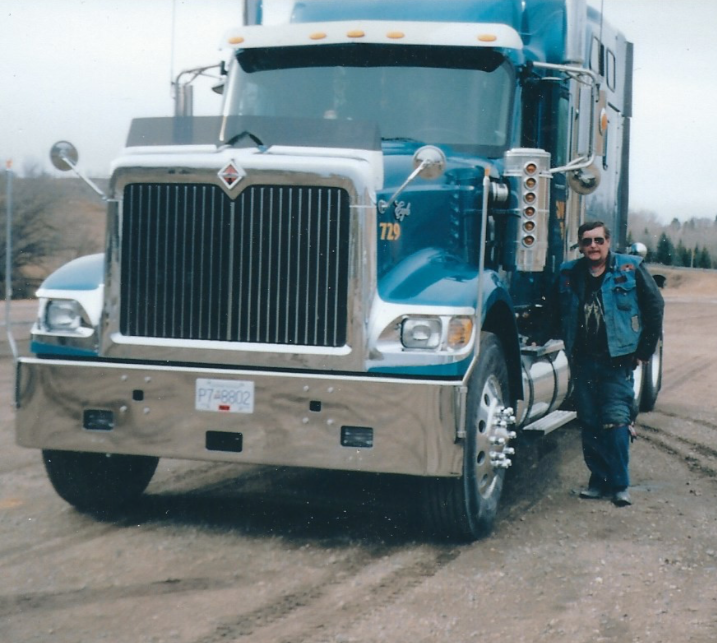
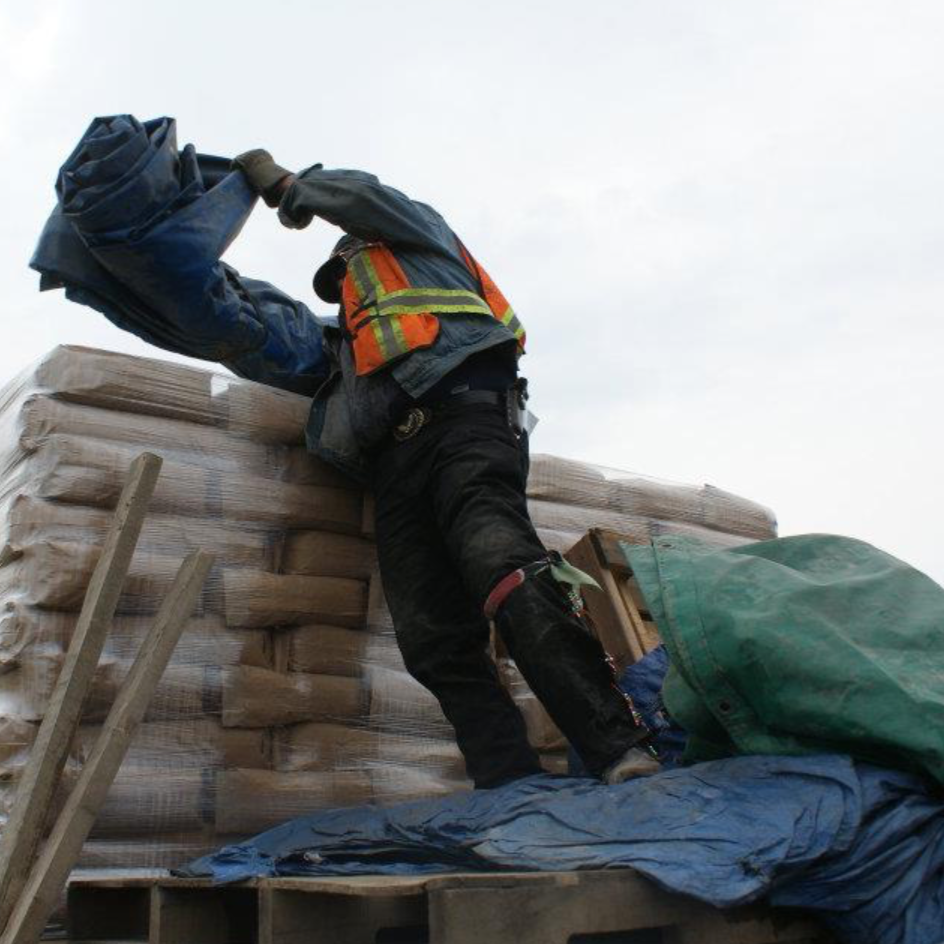
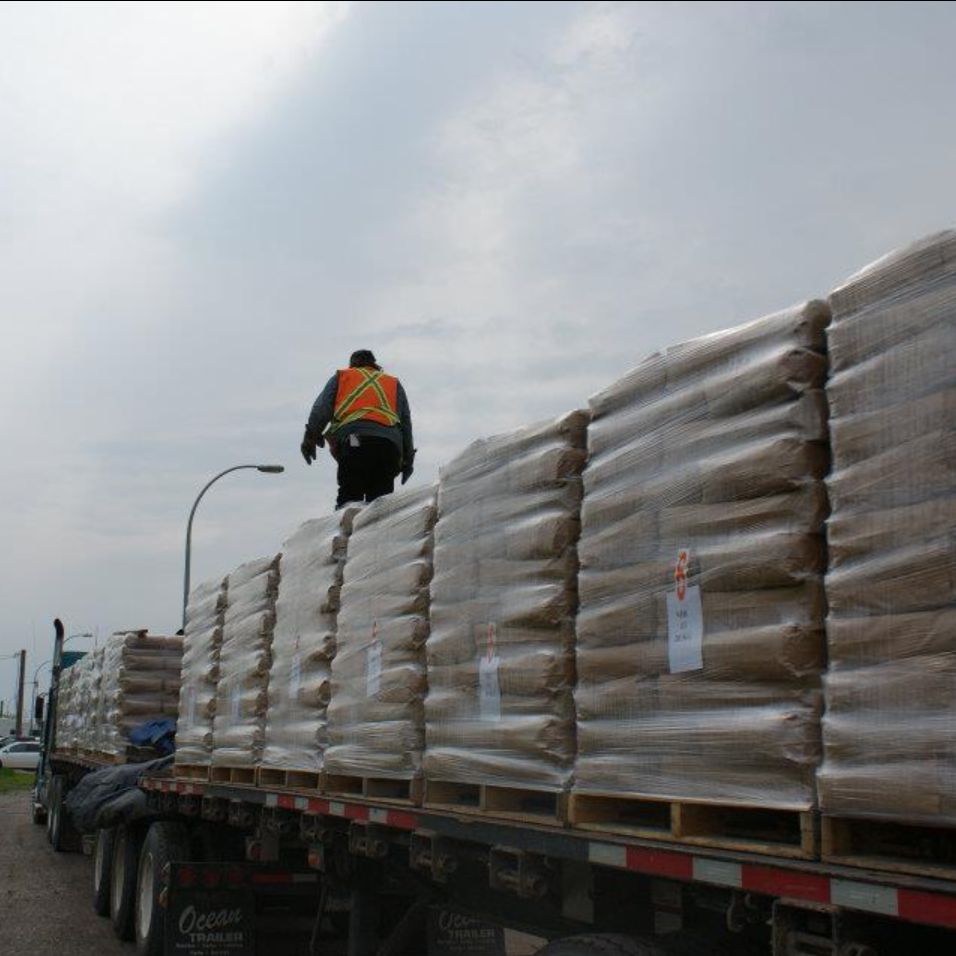
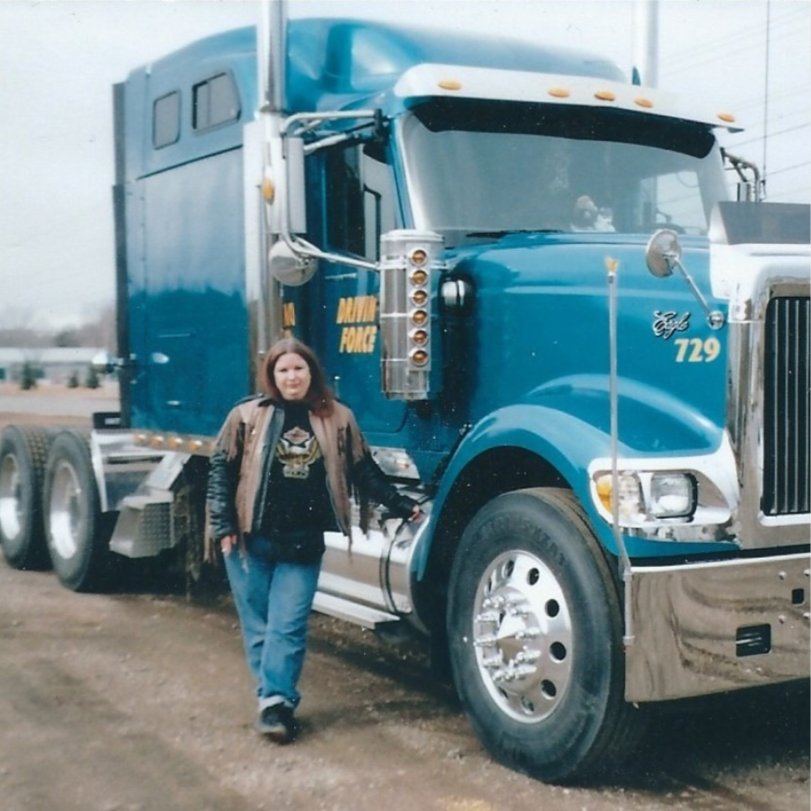
Carl hauled other things as well - wrapped lumber was a common one. If the wrapped lumber was for export, it had to be tarped to avoid bug splat, pollen, and other plant gunk which is not allowed to cross borders. Lumber tarps for lead trailers are heavy as hell, about 100 lbs each; steel tarps are much lighter. I can tell you that truckers hate having to tarp - they’d rather just secure the load and go.
To save time and money, we would often store frozen meals in the trailer toolboxes in winter, they acted as a freezer.
Today
Today, depending on their running authorities, Canadian truck drivers can travel across the country without crossing borders. A load of lumber from Prince George to Toronto, or a load of swinging beef from Brooks to Quebec, is a straight shot. No borders, no customs, no extra paperwork.
Let’s examine how Separation would affect the Following scenario
Carl lived in Medicine Hat but his truck was contracted with a BC company, he ran BC plates. He had a regular LTL run from Saskatchewan to the west coast with drops in southern AB/BC; he picked up a backhaul from the docks in the Lower Mainland.
Assumptions
Alberta has negotiated to have the exact same rules as Canada and the US in regards to CUSMA.
Alberta citizens retain Canadian citizenship with the right to live and work in Canada.
Alberta licences are recognized in both bordering countries.
1 Employment status. The BC firm will be far less likely to hire a worker living in another country when they can hire someone who lives in Canada. An Albertan trucker would likely not be allowed to haul domestic loads unless they are registered as Temporary Foreign Worker (TFW) with all the extra paperwork that includes.
If an Albertan trucker is not eligible to enter the US, that may cause a problem. Canadian firms wanting to ship to Alberta will have to shift to being able to ship internationally, they will likely want their drivers to be able to enter as many countries as possible.
2 Current trucking regulations do not allow for a domestic load to pass through another country. Hauling a load from Saskatchewan to BC would be an issue. They could possibly create an in-transit corridor for sealed trucks that would only be allowed to stop in Alberta for fuel, rest stops, or emergencies. Sealing a tanker truck or a flat deck would be much more time consuming at the border. Given that it takes about 5 hours to cross Alberta via the #1 Hwy, that adds a significant amount of time to the trip. That will add to the cost of the load with the cost being passed onto the consumer.
3 An LTL load that starts in SK with drops in Alberta and BC would be more difficult. An Albertan carrier can pick up the load in SK and deliver to the AB drops but would be prohibited from continuing on to BC according to CUSMA. The shipper would either have to split the load or hire a Canadian company to take it all the way. That will add to the cost of the load with the cost being passed onto the consumer.
4 Forget about storing any personal stuff in the trailer toolboxes - that handy freezer would be gone. The truck itself would be subject to search at every border crossing. Food that does not meet the standards for crossing a border must be thrown out.
They promised we’d ‘Stay Free.’ They just didn’t mention the part about the passport line, the border guards, and the customs forms.
Remember Hay West when Eastern farmers sent hay to drought stricken Western farmers, not once but twice?
The latest one was in 2021 but it first started in 2002 when some areas of Alberta had the worst drought in 133 years. Eastern farmers could have easily profited on the higher prices they would get for their beef if they let Western farmers fail. They didn’t. Instead, Eastern farmers stepped up and helped their competition. Railways donated rail cars, truckers volunteered, farmers donated hay, donations rolled in to cover fuel costs. The federal government contributed $3.8 million to help offset transportation and fumigation costs.
It was a heroic, coast-to-coast effort.
2012 it was reversed when it became Hay East - this time it was Western farmers helping Eastern farmers.
2021, it again became Hay West.
For all 3 scenarios there were no
borders,
export permits,
import permits.
A truck from Ontario drove straight to Alberta. The whole country watched with pride. We weren't separate provinces; we were one family, helping our own. The hay moved as quick as it could be loaded.
Check out this article - my colleague Alex McCuaig wrote this in 2021 for the Western Producer.
After Separation: A Fence in the Family
This same scenario becomes very onerous. It's not simply moving hay from one part of the country to another, it’s now a deal between two countries. Before trucks can move, governments have to meet and make a plan. Every truck will need export/import permits among other paperwork to cross. Even if the load was inspected and sealed before leaving the origin, it is likely that belts would need to be tightened and tarps adjusted while en route. They cannot do that without breaking the seals which causes all kinds of legal headaches.
Once at the border, even if they do the inspections at warp speed, it adds hours to the trip.
Bottom line
The APP and Stay Free Alberta seem to have no answers to our questions.
There’s an old saying
People don't plan to fail, they fail to plan.
If separation has even the faintest hope of being successful, the APP and Stay Free Alberta will need
to come up with some concrete answers rather than just vaguely saying
“That will all need to be negotiated.”
