

Council Votes To Move Forward With Saamis Solar
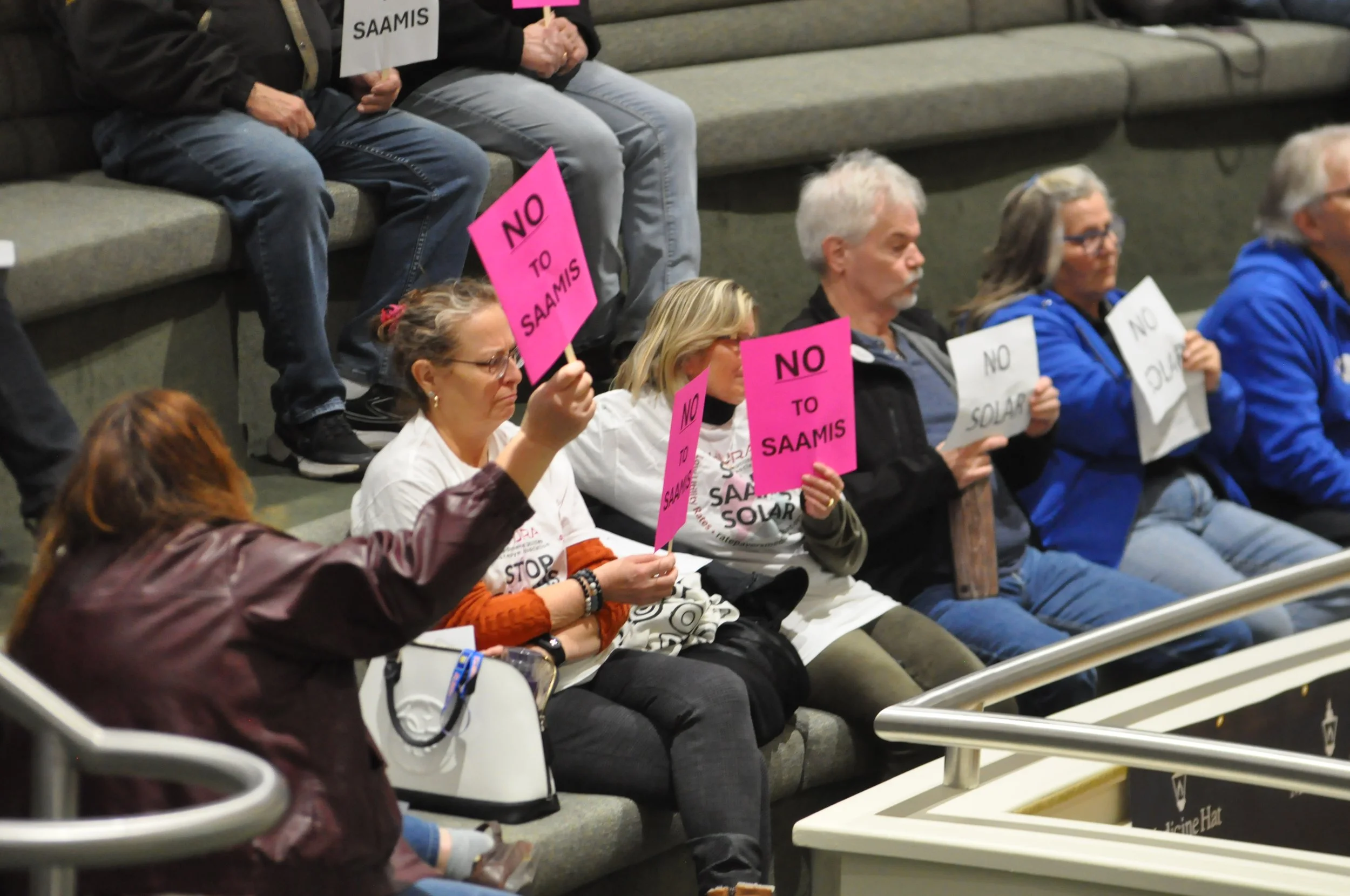
Those in opposition to the Saamis Solar project made their position clear during Monday’s council meeting. (Photo Alex McCuaig)
A full moon was hanging outside City Hall Monday night but howls of protest were coming from inside council chambers as many of 70 Hatters gathered made their opposition to the Saamis Solar project known.
Despite the vocal objections of dozens of those gathered sporting signs, stickers and T-shirts indicating their opposition to the solar play, councillors voted unanimously to move the project forward.
At least, the first 75 MW of the 325 MW project located on the northern edge of the city, bordered to the east by the CF plant and to the west by where the gravel road section of Division Avenue meets the South Saskatchewan River.
Councillors Cheryl Phaff and Chris Hellman stated during Monday’s meeting that while they were skeptical of the project, they have since been won over by the upside potential of the solar development.
“In my mind, the main question is does it make money,” stated Phaff during the meeting. “And the answer is yes.”
Hellman told council the project is about economic development and taking advantage of opportunities.
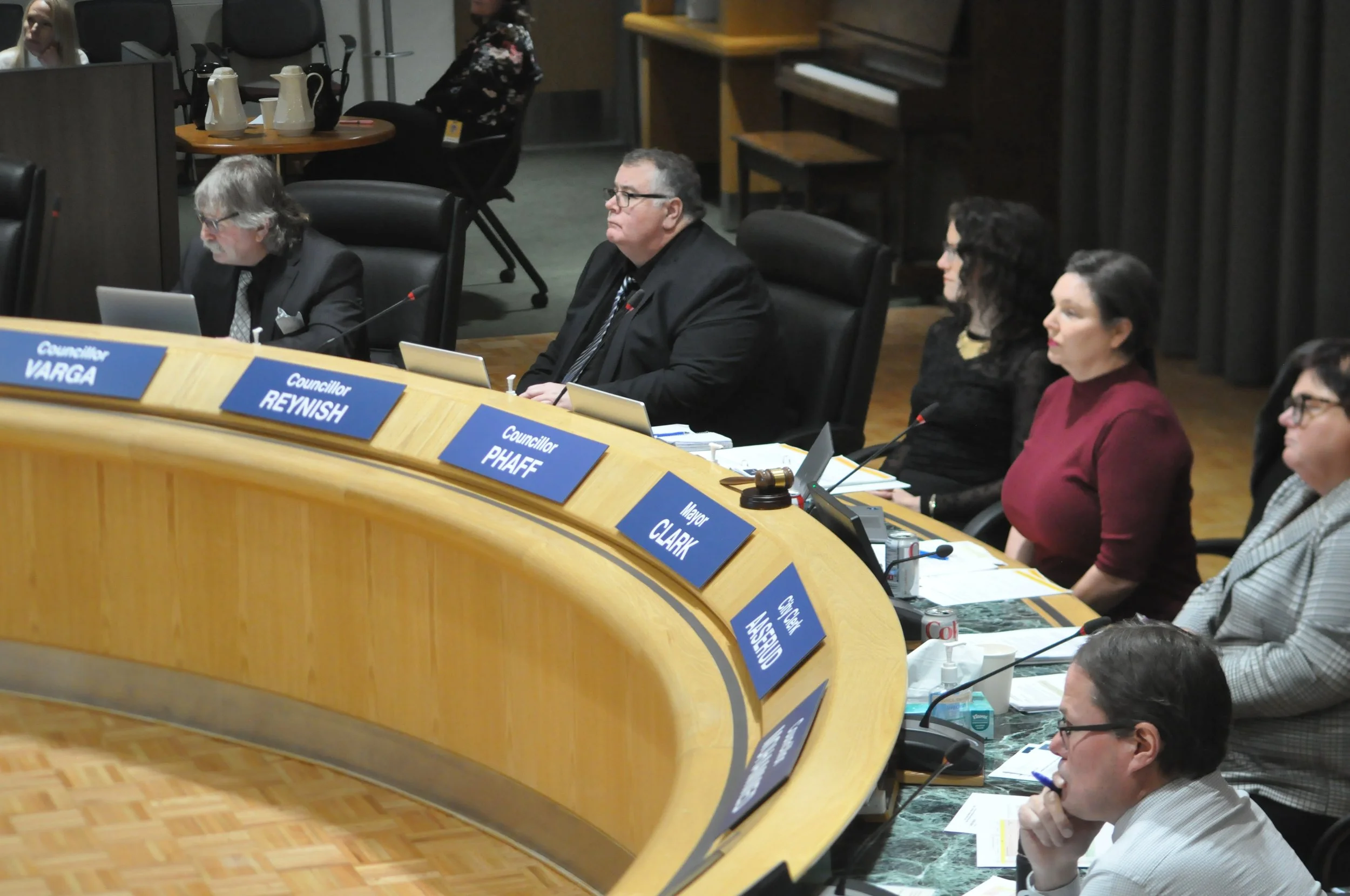
Councillor’s listening to the presentation by the head of the city’s energy division Rochelle Pancoast on Monday. (Photo Alex McCuaig)
“There is a green (energy) customer out there that is in search of that kind of electricity that we don’t have to offer. If we don’t make that available in our community, we are going to lose that opportunity,” he said. “It won’t raise your property taxes, in fact, it might do the opposite.”
Hellman added the linear taxes applied to industrial operations would see $1.5 million paid into city coffers.
“And that does not take into consideration if it attracts new business that relocates here and builds and they pay property tax too,” he added.
But council’s approval of the project is conditional.
The first hurdle will be approving funding of the more than $131 million price tag. Half of that cost will be covered through the city’s $75 million energy transition reserve set up by the last council. The other half will require the city to take on more than $65 million in debt that will require passage of a bylaw.
A long-term power supply contract will also be required before ground breaks on the project and regulatory approval.
Council added a fourth condition Monday night; the creation of a municipally controlled corporation specific to Saamis Solar.
Coun. Ted Clugston stressed to those in opposition to the project to focus on the condition that a long-term contract to supply the power from Saamis Solar will need to be in place prior to construction.

Stickers from the Medicine Hat United Ratepayers Association circulating in council chambers on Monday. (Photo Alex McCuaig)
“A lot of people think we are building this so we can somehow, out of ideological reasons, we can go green,” Clugston told council. “There is no one in this room who can’t stand the misinformation about going green than myself other than maybe Coun. Phaff and we are living in an environment where we don’t make the rules – don’t hate the player, hate the game.”
Following those remarks, the meeting unraveled somewhat as those opposed to Saamis Solar vigorously voiced their opinions regarding the project which required Mayor Linnsie Clark to call for a recess.
Following the 15-minute break, Coun. Stu Young stressed the need for council to be able to discuss the issues, raise questions about the project and decide.
“The easiest thing to do would be to walk away from this because there is 50 people here with signs who don’t want it. The easiest thing for us to do is be like, no, the political pressure is too hard, I don’t want to be yelled at,” said Young during an impassioned plea. “It’s not about doing the easy thing, it’s about doing the right thing.”
Councillors remarked numerous times they’ve been briefed on details of the project which can’t be publicly disclosed as they asked for Hatters to trust their decision to move forward.
Councillors were less definitive in how the claims the project would be financially beneficial would be verified. However, there were indications the municipally controlled corporation would report dividends provided to city government. The exact structure of the Saamis Solar corporate entity – described as a “special purpose vehicle” in council’s motion – is also unknown.
In comments to the media following the meeting, Clugston explained the Saamis Solar corporation is part of the requirement for eligibility for federal financial support.
“In order to get special investor tax credits from the other levels of government we need to form some sort of corporation,” he said while citing the city’s purchase of Allied Oil & Gas in 2001 as a similar situation. “We used that for different acquisitions so it’s not new for the city.”
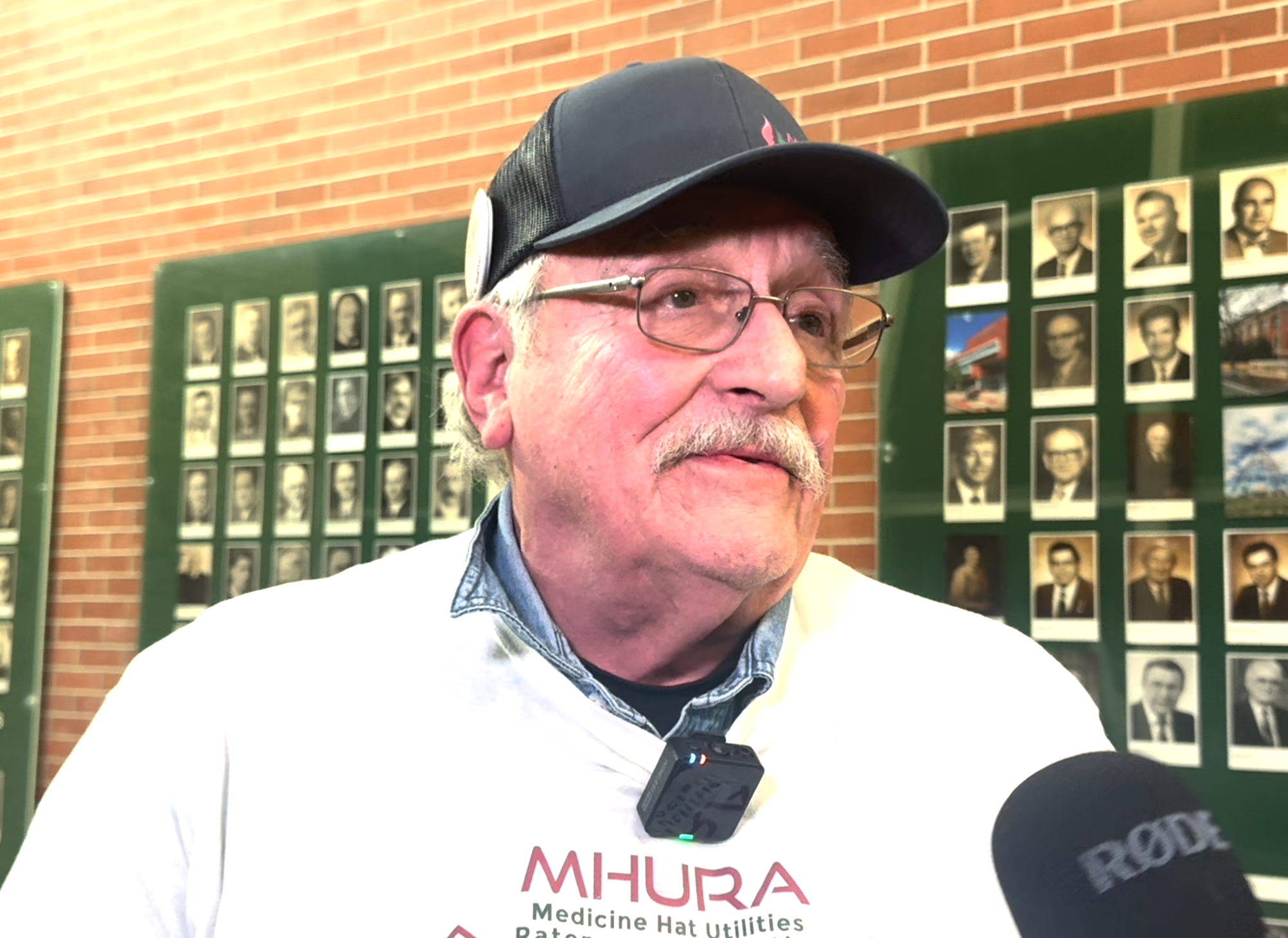
MHURA president Wes Pratt speaks to reporters following Monday’s council meeting.
Allied, a corporate subsidiary of the city, was behind the largest single purchase in the city’s energy division’s history when it bought $135 million in natural gas reserves in 2007.
Clark stressed the Saamis Solar corporation is separate and distinct from last council’s debate over parlaying the city’s entire energy division into municipally controlled corporation.
“There will be more discussion to come,” added the mayor on that topic.
A federal program for renewable projects could see 30 per cent of cost contributed through an investor tax credit but that will require Alberta government approval under the Provincial Priorities Act.
Wes Pratt, president of the Medicine Hat United Ratepayers Association (MHURA), said the city isn’t sharing enough information.
“I know we elected these people to be our voice, to be looking at things but there are so many questions that are under the table here that they’ve ‘looked at’ that aren’t being answered to the taxpayers,” said Pratt following the meeting.
Pratt also questioned the viability of solar energy, especially in northern climates while highlighting the electricity market as a whole is in a state of flux.
“If I put a buck in, I want to get a profit out and if you can’t give me a return on investment – number, quotient, whatever – short term, medium term, long-term, I question the risk that’s involved,” he said.
The issue will once again be before council following public notice of its debenture bylaw for $65.7 million.