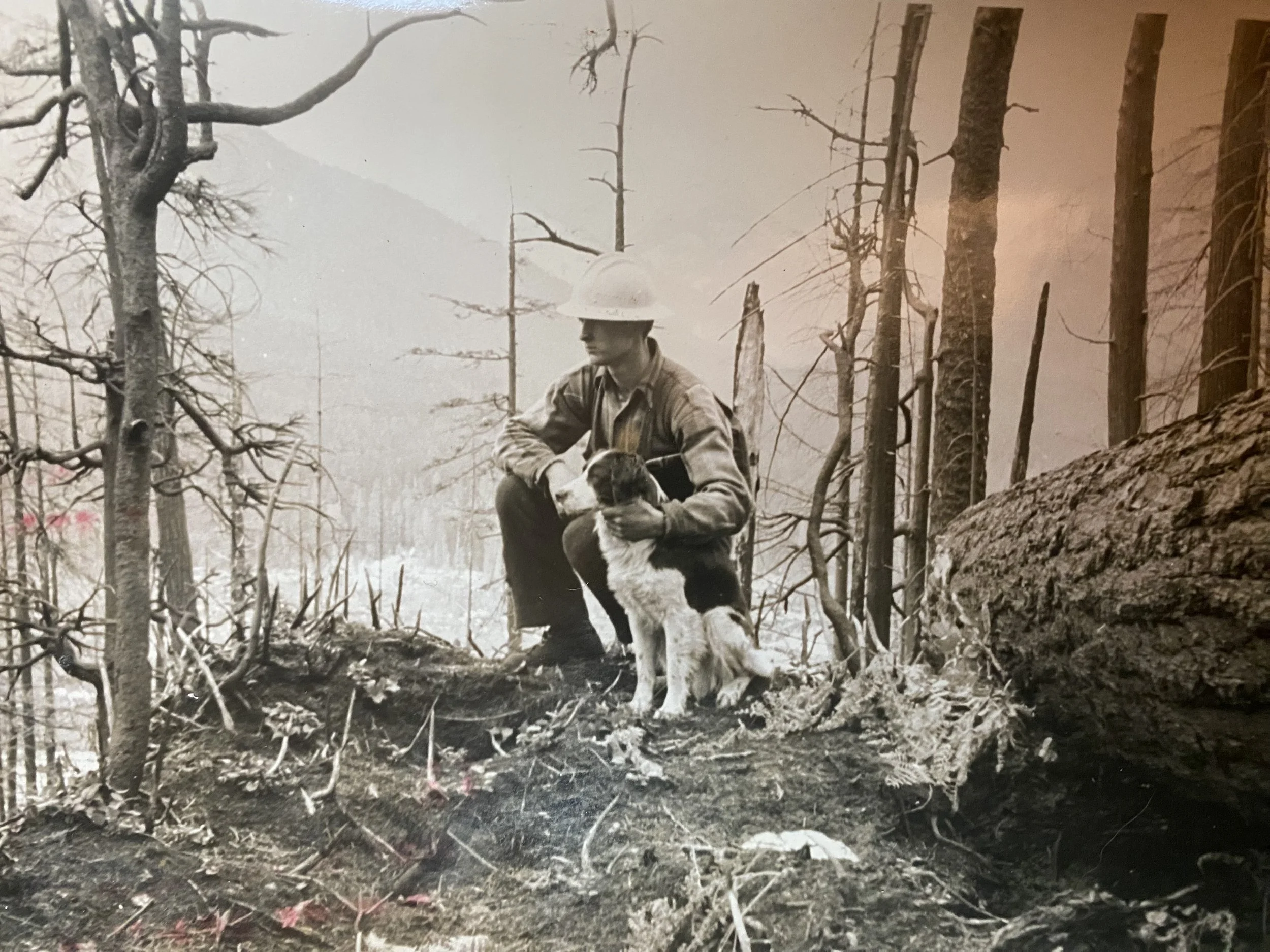
Dementia Dad Post #6 - Dad has cleared west, climb unlimited
Dad passed away 155 days after being transferred to the long term care (LTC) home.
I thought we had more time; I was not able to make it out to see him before he died.
Dad Seemed to Be Fine
Dad seemed to be fine when I called him on his 92nd birthday just 11 days before. His hearing was very bad so I asked them to try to clean out his ears - despite his advanced age, Dad had really good hearing unless he had a buildup of earwax.
When the Care Home Starts Calling, The End is Likely Near
The care home started calling me the next week, telling me he was not eating or drinking much. They told me that Dad seemed to be confused and that they had sent away his urine for testing. They would keep me posted. A nutritionist called me later that day. The nutritionist asked if it was okay if they offered Dad liquid supplements (think Boost or Ensure). They said it was too dangerous to give him solid foods so they put him on a pureed diet. I gave the okay for oral liquid supplements but I said I would not approve a feeding tube - an NG (Nasogastric) would likely be pulled out and a PEG (gut tube) was invasive, he would likely tug on that too.
The blood in the urine had been going on for a long time, since he had been admitted to hospital over a year before. As for eating - most of the time when Dad was still living at his home, he was only drinking Boost and eating the odd orange, grapes or candy - he felt pain every time he ate solid food. An underlying malignancy was suspected but we did not do any testing. Unless the test results will change the course of treatment, there is no point in doing any invasive testing. Dad was too old and frail to survive surgery or chemotherapy so why subject him to uncomfortable tests just to satisfy my curiosity?
I told the nutritionist that I was planning on coming out at the end of the month and asked her if I should come sooner, she said no, she did not think that the eating and drinking was that much of an issue.
In the back of my mind, I was wondering - is it getting close to the end or is he ill? My mind went back to when my husband Carl died, he drank/ate very little in his last few days. (We’d cooked up a feast for his Early Christmas but Carl hardly ate anything.) I tried to stay hopeful, not telling anybody my thoughts.
Sat Feb 7
I decided to be proactive and contact a funeral home and do the pre-planning for Dad. I’ve had to deal with making funeral arrangements 3 times before (my in-laws and my husband); I found it is better to do everything beforehand rather than after the fact, there is less emotion involved. Obviously Dad was going to die sometime but I did not expect it to be imminent. I emailed them, expecting to hear from them on Monday. I also contacted my lawyer to start making arrangements to sell Dad’s property.
I booked my flight out there, my ferry reservations, my accommodations, my car rental.
A few days later, the care home called me again - Dad was getting worse. His urine test results had not come back yet but they prescribed antibiotics anyway - it was hard to convince Dad to take them; he was even more confused. He had complained of increased pain and I told them to give him whatever he wanted for pain. Dad had been taking hydromorphone since he was in the hospital, he even had a song for it - sung to the tune of Howdy Doody
It’s hy-dro mor-phone time,
It’s hy-dro mor-phone time…
At that point, I started wondering - UTIs (urinary tract infection) in the elderly can turn septic quickly.
I’ve had experience with sepsis and septic shock with Carl - Carl was not making any sense when his kidneys shut due to influenza A and Strep Pneumonia. His O2 and blood pressure ( BP) was in the toilet.
I asked for Dad’s vitals - BP was good, O2 was fine, heart rate (HR) was slightly elevated but that could have been due to the pain he was constantly in. His temperature was up sightly.
Then the subject came up about transferring Dad to the hospital, they said that they did not send anyone to the hospital without the family’s consent. I had a decision to make.
Did The Risk of Sending Dad to the Hospital Outweigh the Benefits?
What could the hospital do that the care home was not already doing?
IV antibiotics? Yes, but they are very hard on the system. Dad was 92yo and very frail.
IV fluids? Sure but it is invasive and painful - with Dad’s confusion, it is likely he would have pulled it out unless they restrained him.
Would they honour the DNR (Do Not Resuscitate)?
That was the big question. CPR on elderly people causes broken bones and is likely to be unsuccessful. Why cause pain instead of allowing nature to take its course?
I told them to NOT send Dad to the hospital.
After I hung up the phone, I called my mom, she is a retired RN. I was not sure I had made the right decision. I wanted to double check with someone.
(My parents divorced 50 years ago, I was appointed Committee aka Guardian so it was my decision to make, not hers.)
Mom said that sometimes hospitals don’t read the paperwork, sometimes they forget. Responding to a code can be automatic - their job is to keep people alive. People who should have been allowed to die peacefully ended up with the pain of broken ribs and they died anyway.
My mind was eased - I had made the right call.
The risk of sending Dad to the hospital outweighed the benefits.
I called the care home the next day. Dad’s hearing was still not good so I just spoke with staff. I asked for Dad’s vitals again, they seemed to be holding steady - no decline meaning no sepsis. The nurse said that they were able to get Dad up in a chair that day. Dad was notorious for wanting to stay in bed (he could not walk) so they were very proud of being able to get Dad in a chair. I congratulated them and hung up the phone.
I was wondering - was this a good thing or was Dad now just too weak to fight them?
My thoughts were - this is not a good thing, Dad was declining.
Feb 9
Another day, another phone call from the care home. This time they wanted my permission to offer Dad only comfort care. I asked them to spell out what it meant so that I had a good understanding. I don't recall their exact words but here's the definition according to Alberta Health Services (AHS) -
When your health condition or your values and wishes reflect a goal of maximizing comfort and relieving symptoms, this approach is called comfort care. Your doctors and nurses will give you medicines and other medical treatments to help control uncomfortable symptoms such as pain, trouble breathing, or feeling sick to your stomach. The main goal is not to prolong life. It is to maximize your comfort. Resuscitative treatments are not used.
Comfort care does not mean that you receive less care. It means the focus of your medical care is on quality of life and reduction of symptoms.
They asked if I wanted to speak to Dad and I said yes. His hearing had not yet been restored but I felt I should try to talk to him. When he got on the phone, I could not understand anything he said - it sounded like he’d had a stroke. (I don't think he actually had a stroke, that was just my thought at the time.) That showed the amount of deterioration that had occurred since I had called him on his birthday, just 10 days before. Even if his hearing was crystal clear, it would not have made a difference.
I told him I loved him, that others sent their love and that I was coming out there in ten days. Even as I said that I knew that I would not make it in time to see him again.
Later that day, the funeral home contacted me. I told them where Dad was and I had told the care home to call the funeral home when the time came. I also heard from the lawyer,
Feb 10
I got the call that he had passed peacefully. My calls to the funeral home and the lawyer were unknowingly timely.
Final thoughts
Of course there were feelings of guilt.
Could I have called him more often? Yes, absolutely. I took comfort in knowing that if I didn't call, he wouldn't remember. If I did call, he wouldn't remember that either.
Could I have done anything differently? Sure - I could have packed up my life and gone out there to make his final days better.
Should I have sacrificed my life to improve his? No.
I took care of Carl right up until the end and I was happy to do it - we’d been together over 30 years and Carl had taken care of me when I needed it. Carl was a joy to be around, I felt good when I was with him.
My dad had not been in my life a lot. He could be difficult to get along with, my personal tolerance of his presence even on good days was only a few hours at time. When the dementia kicked in, we need up arguing and I would leave in tears. If I moved out there full time, it would have been very detrimental to my own mental health. Parents are supposed to make sacrifices for their children, not the other way around.
I had no interest in looking after anyone else the way I looked after Carl. (I was offered a job caring for an elderly man after Carl died and I declined - Carl was my heart which is why I was able to look after him the way I did, I could not do it for someone else.)
I spent the next couple of days writing Dad’s obituary.
I wanted it to be as irreverent and honest as he was.