

Updated - The Owl Investigates - Alberta Independence: The Everyday Impact
A statement Received from the CBSA on Jan 23 2026 is further down in The article
Just for the sake of argument, this article assumes that the entire province will stay intact. The Owl recognizes that the current treaties predate Alberta’s existence as a province of Canada.
We examine how everyday life would change if Alberta became an “Independent State. An Independent State means the same thing as “Sovereign State”. This does NOT mean we would be joined with the USA.
The APP (Alberta Prosperity Project) makes high level promises/ projections but they don’t say much about how everyday activities might change for an Independent Alberta. So, The Owl is digging into the fine print to ask:
What would independence actually look like for you?
Dual Citizenship
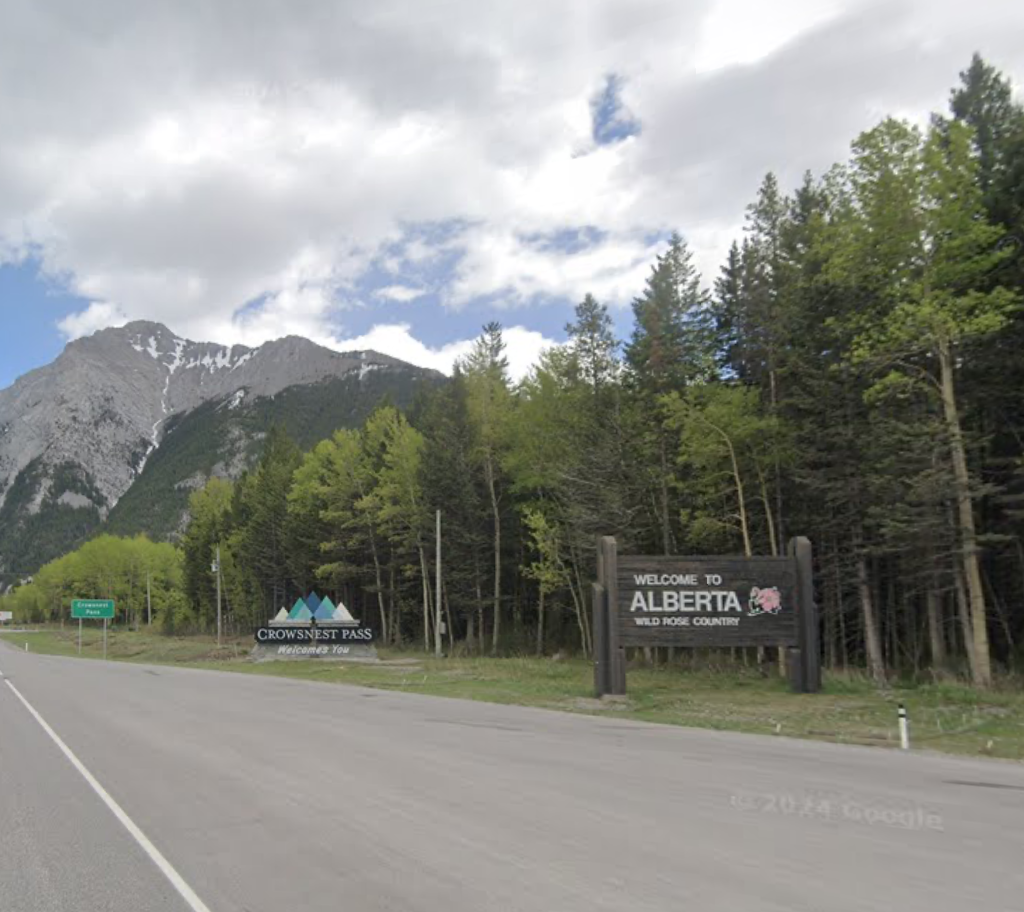
Courtesy of Google Maps
It is true that Canada does allow dual citizenships, about 50 countries allow the same. However, there is currently no law that covers the situation of a province separating; a law would need to be created to address this issue.
Canada has no reason to make secession easy, they will want to discourage other provinces from doing the same. Some of the issues below do go away if dual citizenship is allowed.
If negotiations fail and Alberta unilaterally declares itself independent, forget about any concessions. It will become a very nasty divorce. Canada has the power to move the goalposts as they see fit.
Families and Borders
Custody issues would likely be unchanged. There is already a provision that covers the situation where if one parent wants to move far enough away that it changes parenting agreements.
The Alberta Maintenance Enforcement Program (MEP) would lose all power to garnish wages or intercept tax refunds in Canada. A parent who moves to another province can make it more difficult to collect support payments. Many countries do have reciprocal agreements to enforce custody and child support but they vary. Enforcement actions include license suspension, garnishing wages and federal payments, registration at land titles, forced sale of property, etc.
Current MEP enforcement actions
Visiting family in another province means having to cross an international border.
Currently, it is easy for an Albertan to marry someone from another province and live with them anywhere in Canada. After Alberta separation, that all stops. Your spouse might need a work permit to work in Alberta. If you decided to move to their province, again, work permits may be needed.
Moving Away From Alberta
You cannot pick up and move across Canada to work or go to school, it will be a separate country.
If citizens of an independent Alberta can retain their Canadian citizenship thereby becoming a dual citizen, this problem goes away.
Border /Near Border Towns
Like many Alberta residents, Medicine Hat is near a border. The Hat is about a 1/2 hr away from the Saskatchewan border; our area has very close ties with Saskatchewan. SK residents come here to shop, to go to school, work, or get access to health care - that is all likely to go away.
There are rumblings of Saskatchewan wanting to secede from Canada too, it is unknown if they would join Alberta in a new country or become their own.
You live in Alberta and are visiting someone in Maple Creek. Your car breaks down, you need to get it towed back to your Medicine Hat mechanic. Crossing an international border makes this more difficult. Tow companies may not want to leave the country, you might have to pay two of them 0 one to take it to the border, the other to pick it up from the border.
Work Currently Albertans are free to work anywhere in Canada. After separation your employable region shrinks from 13 provinces/territories to 1.
A number of companies close to Medicine Hat work in Saskatchewan on a regular basis. An independent Alberta would mean crossing an international border in each direction to get to work, adding to an already long work day. There are programs that allow people to cross borders quickly (NEXUS, FAST) but that is not automatically guaranteed.
Not all border crossings are open 24/7. Bringing tools and equipment across an international border means extra paperwork, workers would require foreign work permits. The Canadian company will likely have to prove they could not hire Canadians.
Play Travelling to sports tournaments would mean crossing an international border adding to travel time. Minor hockey is run by Hockey Canada, it is unknown as to whether Albertan children would still play hockey in this league - that goes for many Canadian U18 leagues.
Going to the Saskatchewan side of the Cypress Hills means crossing an international border, as well as going skiing in Fernie or visiting the hot springs in Invermere.
Health Care Coverage Right now, if you get injured anywhere in Canada you can produce your health care card and get treatment. After separation, you can forget about health care portability. You’d need to buy health insurance to travel to Canada. If you are older than dirt, forget about reasonable premiums even if they agree to sell you insurance.
Insurance companies can deny coverage for pre-existing conditions, anything you were “treated” for. Their definition of treatment is not what you might think it is. Getting an EKG is often considered to be a “treatment” for the purposes of insurance coverage even if there was nothing wrong with your heart. Insurance companies will use any excuse they can to avoid paying a claim.
For accurate information, contact your insurance broker or insurance company.
If you get into an accident in Canada and have to be admitted to hospital, you would be on the hook for a lot of money.
A lot of people in Saskatchewan come to Alberta to get treatment. The Medicine Hat Regional Hospital (MHRH) is closer to places like Maple Creek and Burstall than the Swift Current hospital is. That would likely stop.
Yes, it will mean less stress on our health care system but many Albertans have family in Saskatchewan.
Drug costs are likely to go higher because an Independent Alberta would no longer be part of the Pan-Canadian Pharmaceutical Alliance (pCPA). The pCPA is a group where all of Canada's provinces, territories, and the federal government team up to buy prescription drugs together. By buying as one huge group, they have much stronger power to negotiate and get much lower prices from drug companies, saving billions of dollars every year for the public healthcare system. Alberta would go from being part of a group that represented over 41 million people to representing a mere 5 million.
Shopping A lot of people come to Medicine Hat from Saskatchewan to take advantage of no PST in Alberta. That all disappears with having to cross an international border. Duties are payable on returning to Canada on all purchases if your trip is less than 24 hours.
Small purchases are usually ignored. For example - If you popped across the line to buy some gas and a bag or two of groceries it is doubtful they would charge you any duty, it would not be worth their time. It is always at the border guard’s discretion, so you don’t want to piss them off.
You can get a $200 exemption for trips from 24-48 hrs, $800 after 48 hours.
Bottom line - shoppers from Saskatchewan will need to be mindful of what they buy to avoid paying duties. Given the time, the fuel and the hassle of crossing an international border, I’m guessing most will choose to do their major shopping in Saskatchewan.
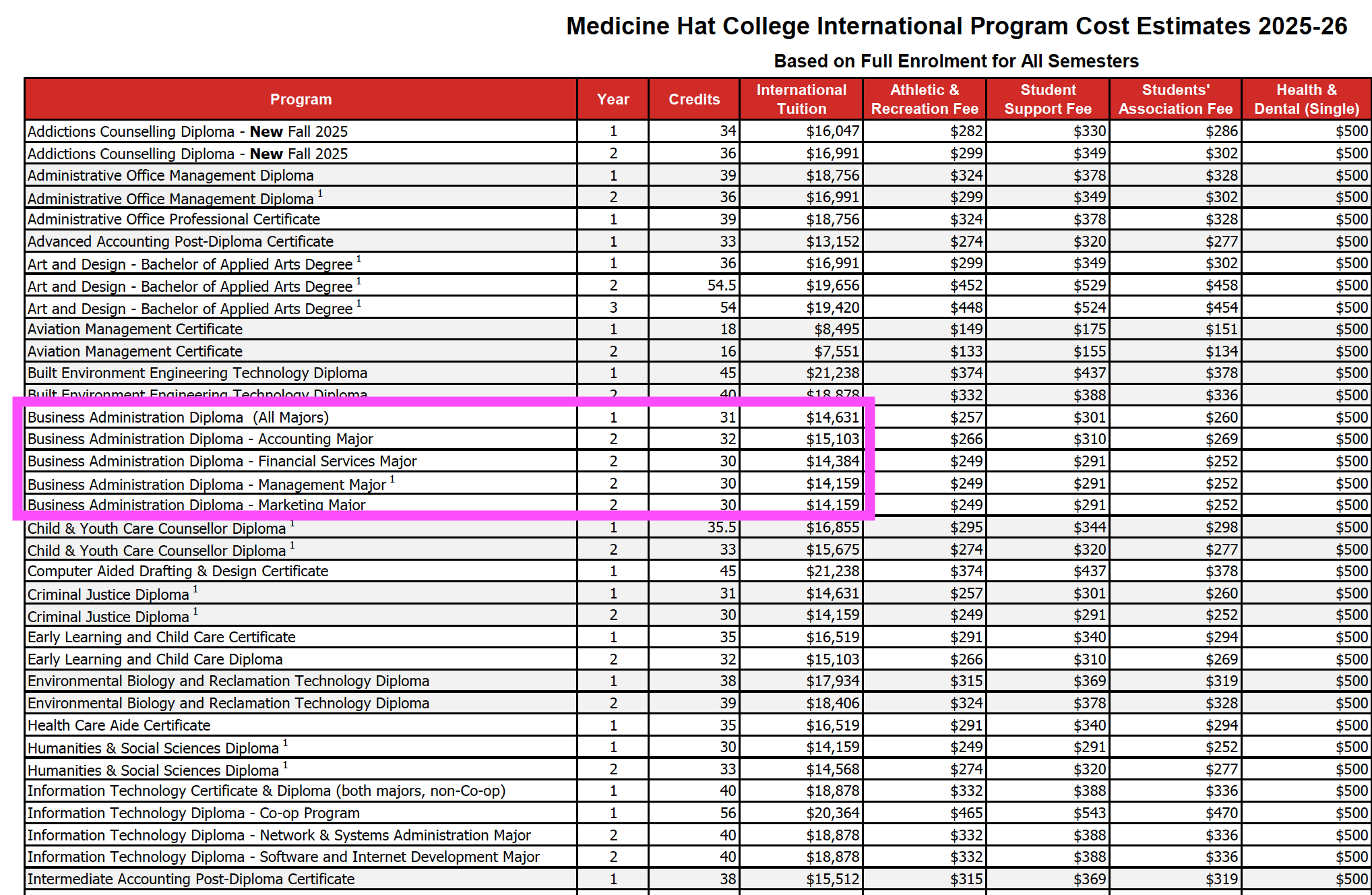
Higher Education Going to university outside of Alberta means paying higher tuition as an international student, this means paying double at least. The reciprocal would also be true, Canadian students would pay more to come here to come to our universities and colleges.
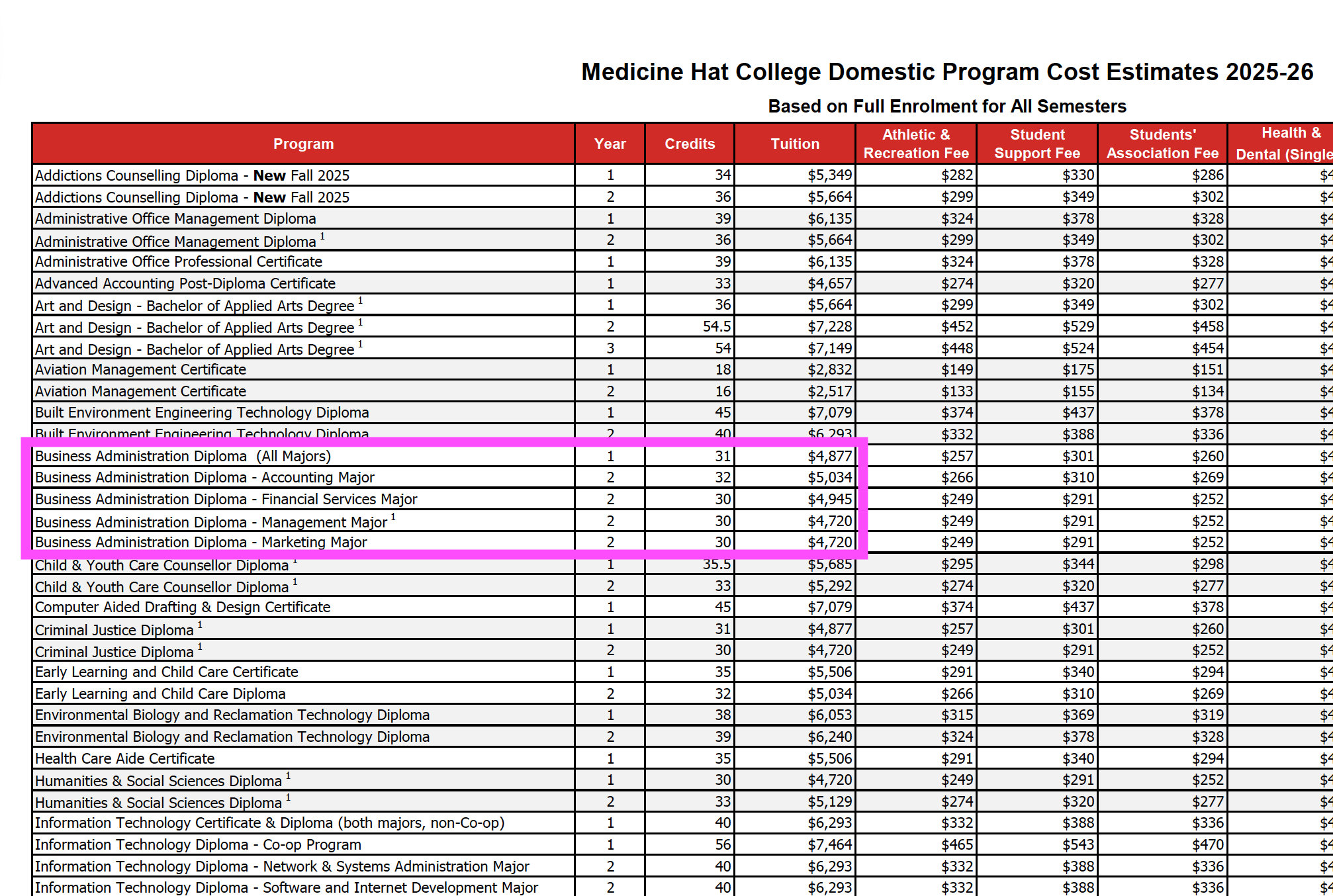
Medicine Hat College (MHC) has a number of students from Saskatchewan. If their status goes from domestic to international, their tuition will triple for most programs. These students would likely choose to go to a Canadian college instead.
Source Tuition costs for MHC - below screenshots courtesy of MHC
Criminal Record Right now, those with a criminal record can travel anywhere in Canada (barring being under any active sanction arising from a conviction). Canada and Canada alone determines who can cross the Canadian border. You might have to leave Uncle Joe at home when going to the family reunion in Regina because Uncle Joe got an impaired charge in an Independent Alberta.
Reasons You May be Inadmissible to Canada
The Owl has reached out to CBSA (Canadian Border Services Agency for clarification on how this affects dual citizens.
The Owl received the following statement from the CBSA this morning.
Canadian citizens (including dual citizens) enter Canada by right pursuant to subsection 19(1) of the Immigration and Refugee Protection Act. Any convictions on a Canadian abroad would have no bearing on the ability for re-entry to Canada. The person will be processed upon arriving to Canada and should there be any indicators of non-compliance with customs legislation, there is always a possibility the individual will be referred to secondary for further processing.
Weed Across Borders
Weed is legal in Canada.
Weed is legal in Montana.
It is illegal to bring Montana weed into Canada and vice versa, penalties can be severe up to and including being judged inadmissible. (They can and will seize your vehicle Stateside.)
Say you go visit your buddy in Swift Current SK and you forgot about the roach you left in the ashtray. They have every right to search your vehicle and to block you from entering Canada. Nobody is allowed to bring weed into Canada, no matter what country they come from. The likelihood of being able to negotiate different standards for an independent Alberta is slim to none.
Penalties for cannabis-related offences
If you don't declare your cannabis or cannabis products to the CBSA or you give inaccurate information in your declaration (for example, incorrect quantity, incorrect product) you may be issued a monetary penalty.
A CBSA officer will give you a Notice of Penalty Assessment (penalty notice) that lists the offence and penalty amount. The officer will base the amount of the penalty on:
the type of offence (undeclared cannabis, inaccurate information)
the severity of offence (concealed undeclared cannabis, quantity of undeclared cannabis)
the history of non-compliance (a past penalty or a past seizure record)
The CBSA keeps records on previous enforcement actions, including monetary penalties. Your request to become a member of a Trusted Traveller program (such as NEXUS or FAST) may be rejected or your existing membership may be cancelled if the CBSA issues you a penalty. Source, Gov’t of Canada
